

Anarkali or lehenga is really a question about one seam. A lehenga is three pieces that meet at your waist; an anarkali takes the same volume of skirt and gathers it into a stitched bodice, so the waist disappears. Almost every practical difference between the
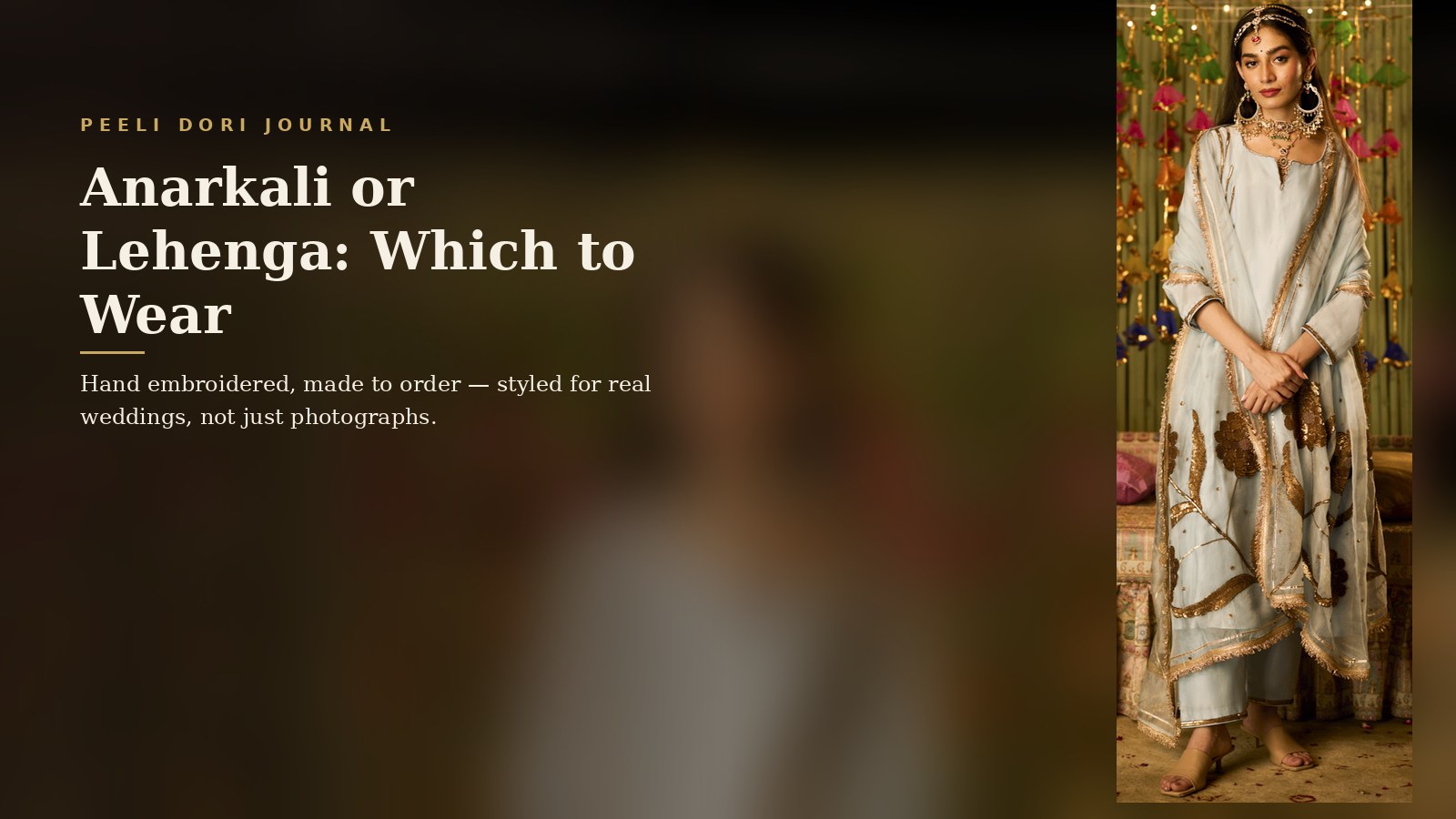
Anarkali or lehenga is really a question about one seam. A lehenga is three pieces that meet at your waist; an anarkali takes the same volume of skirt and gathers it into a stitched bodice, so the waist disappears. Almost every practical difference between the two - how you sit, how you pack, how the photographs look, how many evenings you get out of it - comes from that one choice. This is how we would work it out with you in the store.
The difference is a seam, not a style
Put the two garments side by side and the fabric is often similar, the embroidery is often similar, and the price can be similar too. What differs is assembly. A lehenga is a skirt with a waistband, a separate blouse, and a dupatta - three pieces that you put on one at a time and that meet, more or less, at your waist. An anarkali takes a skirt of the same fullness, gathers it into a fitted bodice and stitches the whole thing into one garment. There is no waistband, no gap at the midriff, and nothing to coordinate on the morning of the function.
That sounds like a small technicality. It is not, because the waist is where a wedding outfit is won or lost. It is the point that has to sit still when you sit, breathe, eat and dance, and it is the point where a stitched garment can be generous or unkind depending on how it was cut for you.
We make anarkalis to measure, which is the only way we would make them. A lehenga can be saved at the last minute by a tailor who takes in the waistband; an anarkali cannot, because correcting the waist means opening the bodice and re-setting the gathers. If the waist is wrong, you feel it for the whole evening rather than for the two minutes it takes to pin something.
What the waist seam buys you
Because a lehenga is in pieces, it is forgiving in ways a one-piece garment is not. The waistband can be tied a little looser after dinner. The blouse can be a different size from the skirt, which matters if your top and bottom have never agreed with single-size clothing. The dupatta can be heavy while the blouse stays light. And the pieces can be separated later - the skirt with a plain blouse for a smaller function, the blouse with a saree for something else entirely.
The cost of all that flexibility is that the blouse becomes its own project. It is the piece most often ordered separately, borrowed, or adjusted twice, and it is the piece that shows the most when it does not fit: armhole, bust dart, the way the back sits when you raise your arms. If you have ever spent a wedding with a blouse that gaped at the back, you already know what that costs.
An anarkali removes that project. One garment, one fitting, one thing to collect. What it demands in exchange is accuracy at the start - which is why we take measurements ourselves in the Delhi and Dehradun stores, or check yours on WhatsApp before anything is cut.
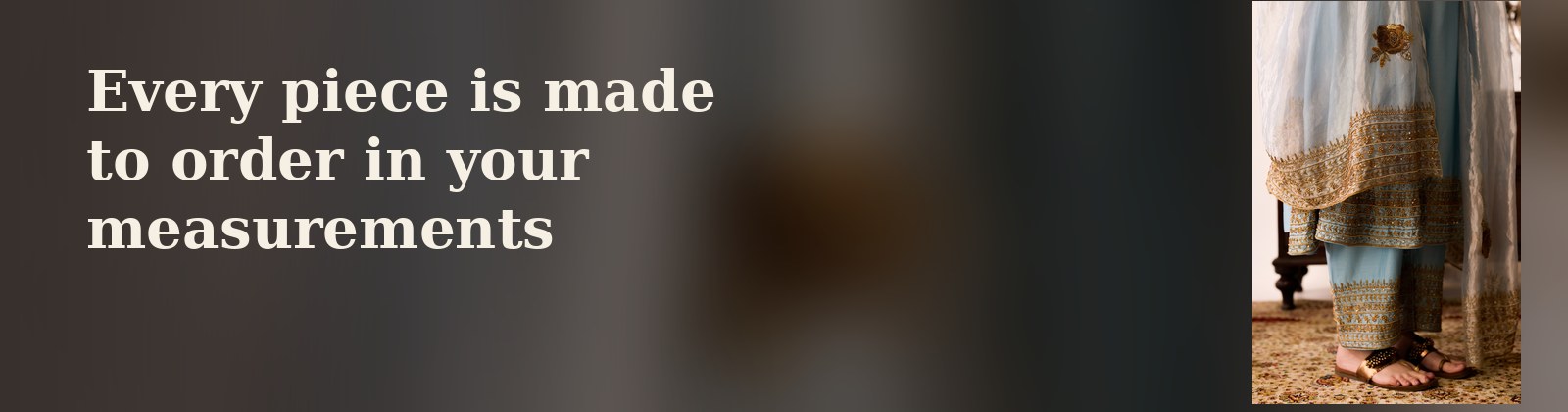
The line each one cuts
In a photograph taken from five feet away, at eye level, in a group, the two read completely differently. A lehenga draws two shapes: a small top and a wide skirt, with a clear waist between them. The eye goes to the waist, and the width of the hem gives the figure a base. An anarkali draws one shape: a long column from shoulder to floor, with the flare saved for the last third. The eye runs down the length instead of stopping at the middle.
That is the honest answer to the body-type question, and it is not about size. If you are petite and want proportion, the lehenga's defined waist and wide hem can do work that a floor-length column will not. If you are tall, or want to look longer than you are, the anarkali's unbroken line does the opposite job. If you would rather not have a waistband pressed into you for six hours, or you do not want a midriff question in the fitting room at all, the anarkali settles it before you leave the house.
What neither garment does is hide bad proportions in the cloth. Both are heavy at the hem, and both need the hem to sit at the right place relative to the shoes you will actually wear. We have seen more outfits spoiled by two centimetres of length than by any other single thing.
Six hours in it: floors, stairs and the dupatta
A mehendi is the test most outfits fail. You sit on the floor for two hours with your hands held out, and the camera comes close, at hand height. A lehenga handles this well because the skirt spreads and the weight falls away from your legs; the waistband is what you notice, not the hem. An anarkali handles it well too, provided the flare starts high enough that you can gather the skirt into your lap rather than kneeling on your own embroidery.
Stairs and dancing suit the lehenga. The skirt swings from the waist, clears your feet and can be kicked out of the way. The same skirt has to be carried, though: a heavily worked lehenga is a genuine weight, and a petticoat that is too stiff will make you walk like a bell. The anarkali is lighter to move in and easier to dance in, but its hem is a hazard on stairs and in a tight banquet aisle, and it needs to be lifted rather than swung.
Then the dupatta, which is the part nobody plans. On a lehenga it is usually pinned at one shoulder into a blouse that has to take the pin. On an anarkali you have a whole bodice to pin into, which is genuinely more secure, and if the piece allows it you can add a belt and take the dupatta off your shoulder entirely. Whichever you choose, decide the pinning at the fitting, not in the car.
How many evenings you actually get
This is where the arithmetic usually decides it, and it is rarely about the first wearing. A lehenga is two outfits: the full set for the big night, then the skirt with a quieter blouse, or the blouse with a saree, for a smaller function later in the season. An anarkali is one look. You can change its register with a different dupatta, a different sleeve if the piece allows it, and different jewellery, but the silhouette is the silhouette, and it will be recognised in the second photograph.
So the question is not which garment is better. It is how many functions you are dressing for and how much of the budget you want in one place. If you have three evenings and one purchase, the lehenga stretches further. If you have one important evening and want to be comfortable and unhurried in it, the anarkali is the better single answer - and it is the one we would put a first-time buyer in.
Price sits in the same place for both, by the way: it is the cloth, the density of the handwork and the number of pieces, not the label. Our lehengas are the higher line on average because a skirt, a blouse and a dupatta is simply more garment than one stitched piece.
What we would put on the shortlist
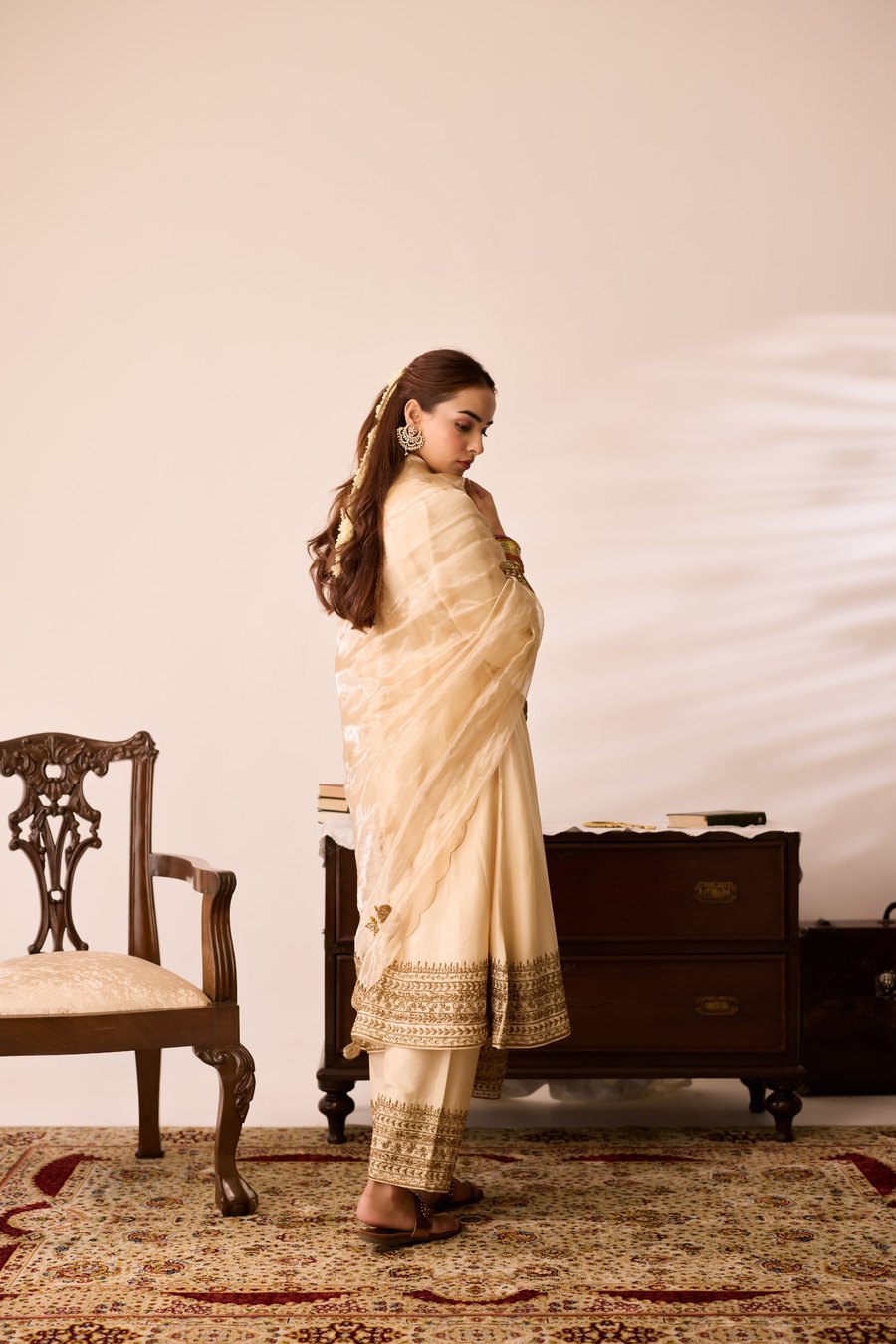
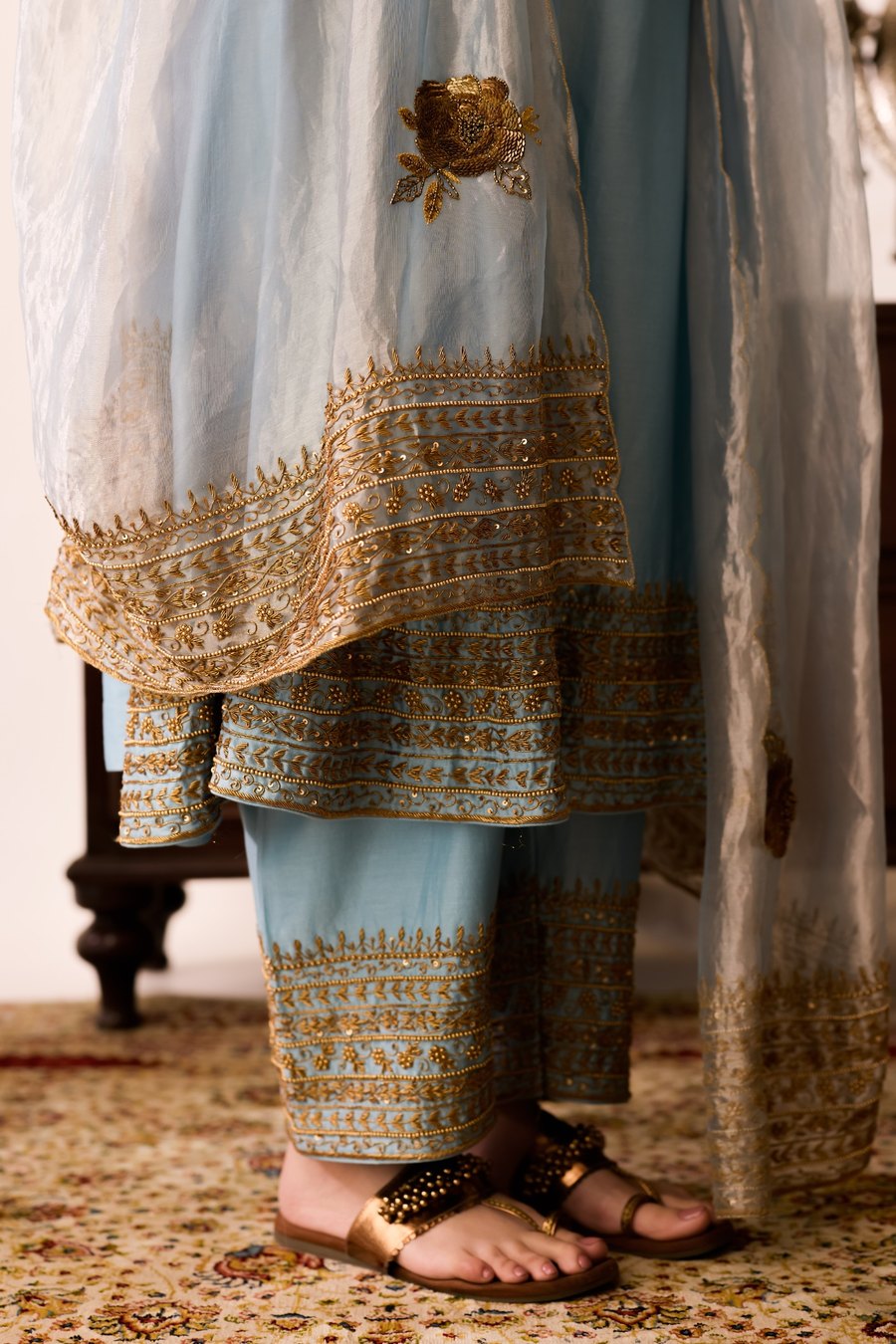
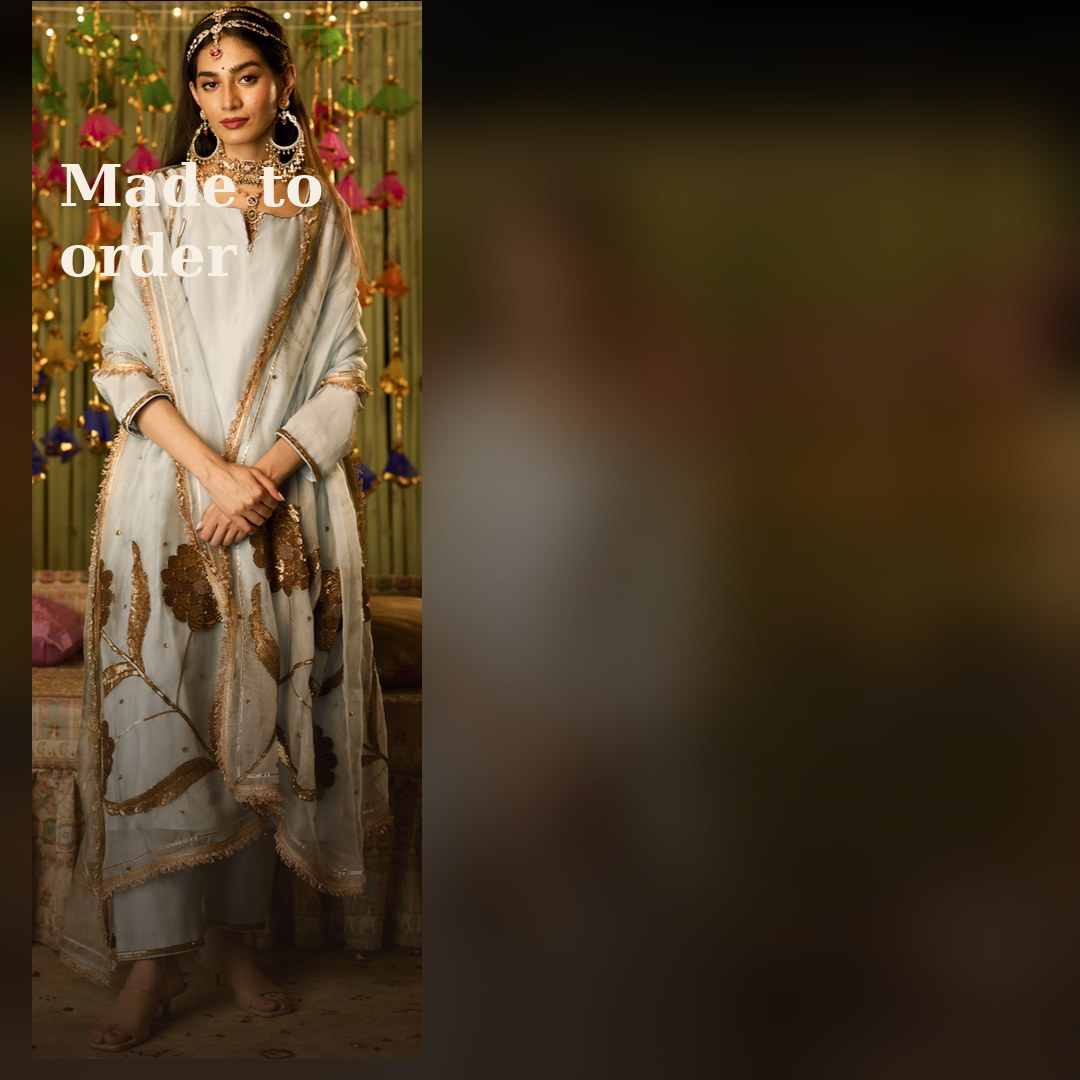
If you have decided on the anarkali, this is where we currently stand, and the range runs from ₹34,500 to ₹44,500. The Gulmohar sets at ₹44,500 are the evening end of it - coconut, powder blue and gulabi, each a full set shown with its dupatta, for functions where the camera is close and the room is bright. The handwork is the reason for the price, and it is the half of the collection we would send to a reception.
Below that, the quieter choices. The Nayanthara anarkali at ₹36,500 is cut plain enough to wear to a wedding you are attending rather than hosting. The Madu sets at ₹36,500 - powder blue and rust orange - are chanderi silk, a dry, papery cloth that takes a crease, travels without drama and reads well in daylight, which makes them the practical pick if the season involves a flight and a hotel room. Madhurima at ₹34,500 is where a hand-embroidered anarkali starts with us, and it is the one we suggest to the family member who would rather not be the subject of the evening.
All of these are hand embroidered and made to order, so the piece is cut for your measurements rather than altered towards them. Shipping within India is free above ₹10,000, which covers every piece here; for a wedding abroad we ship internationally and the code INTSHIP applies above ₹89,000.
₹44,500
₹44,500
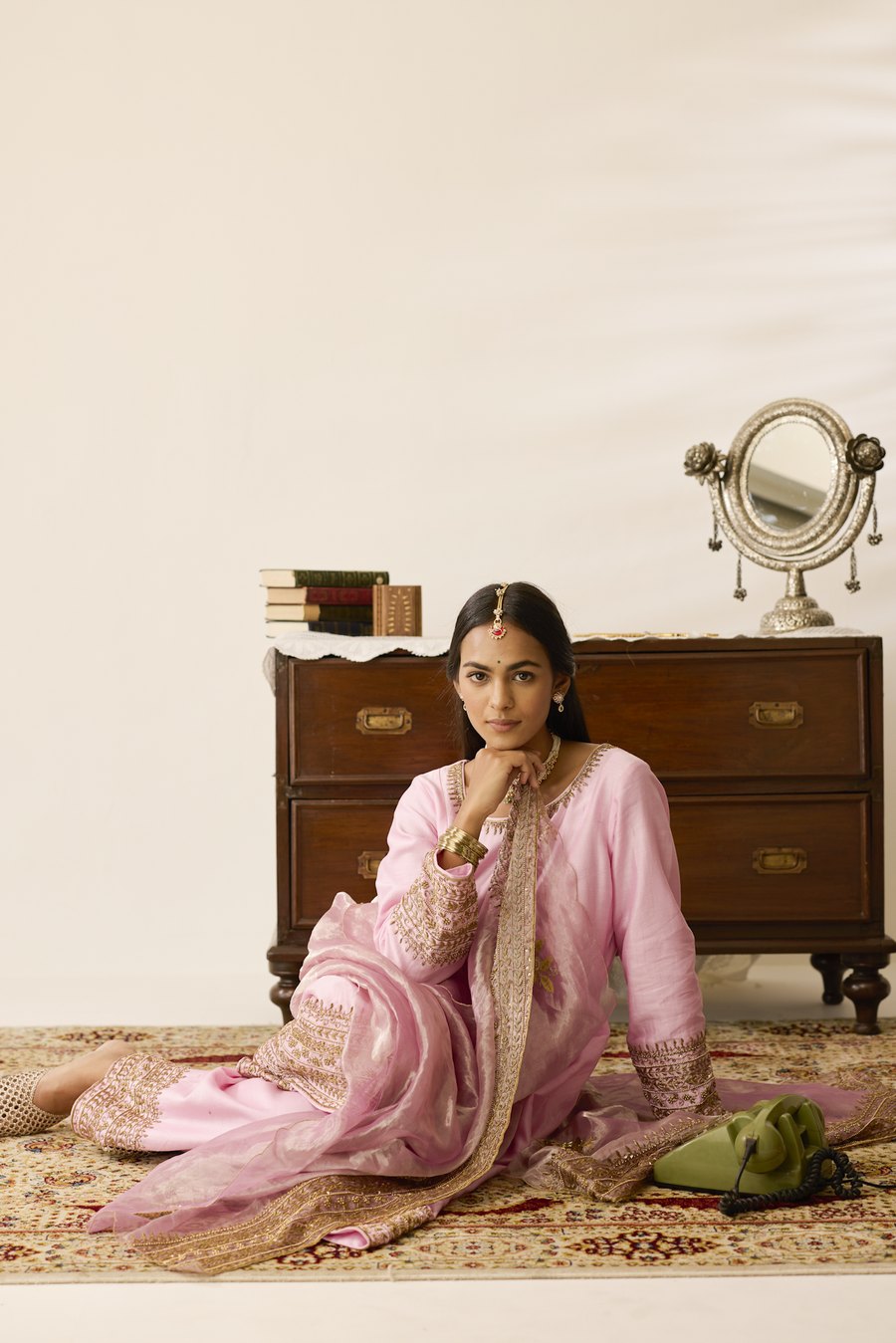
₹44,500
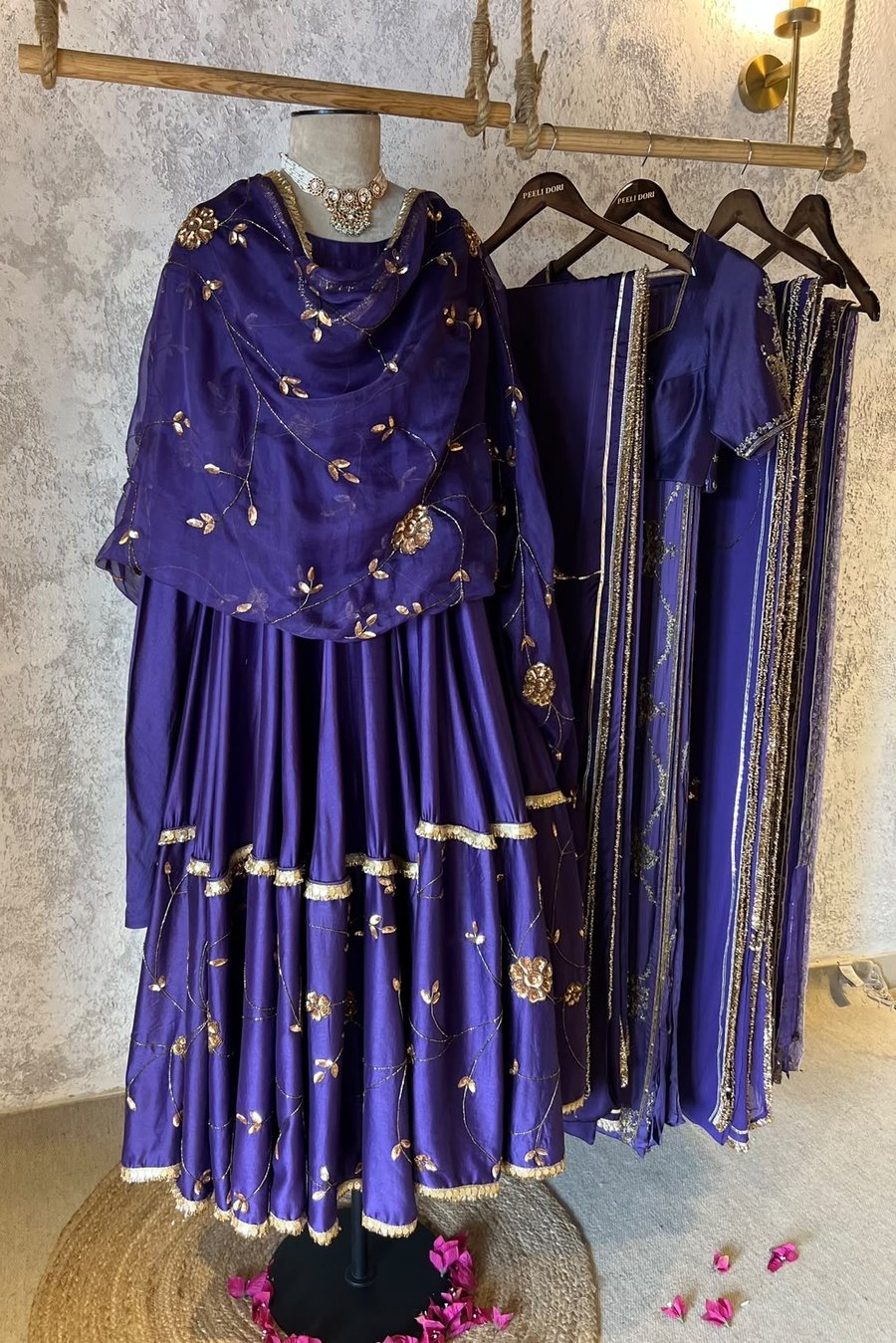
₹36,500
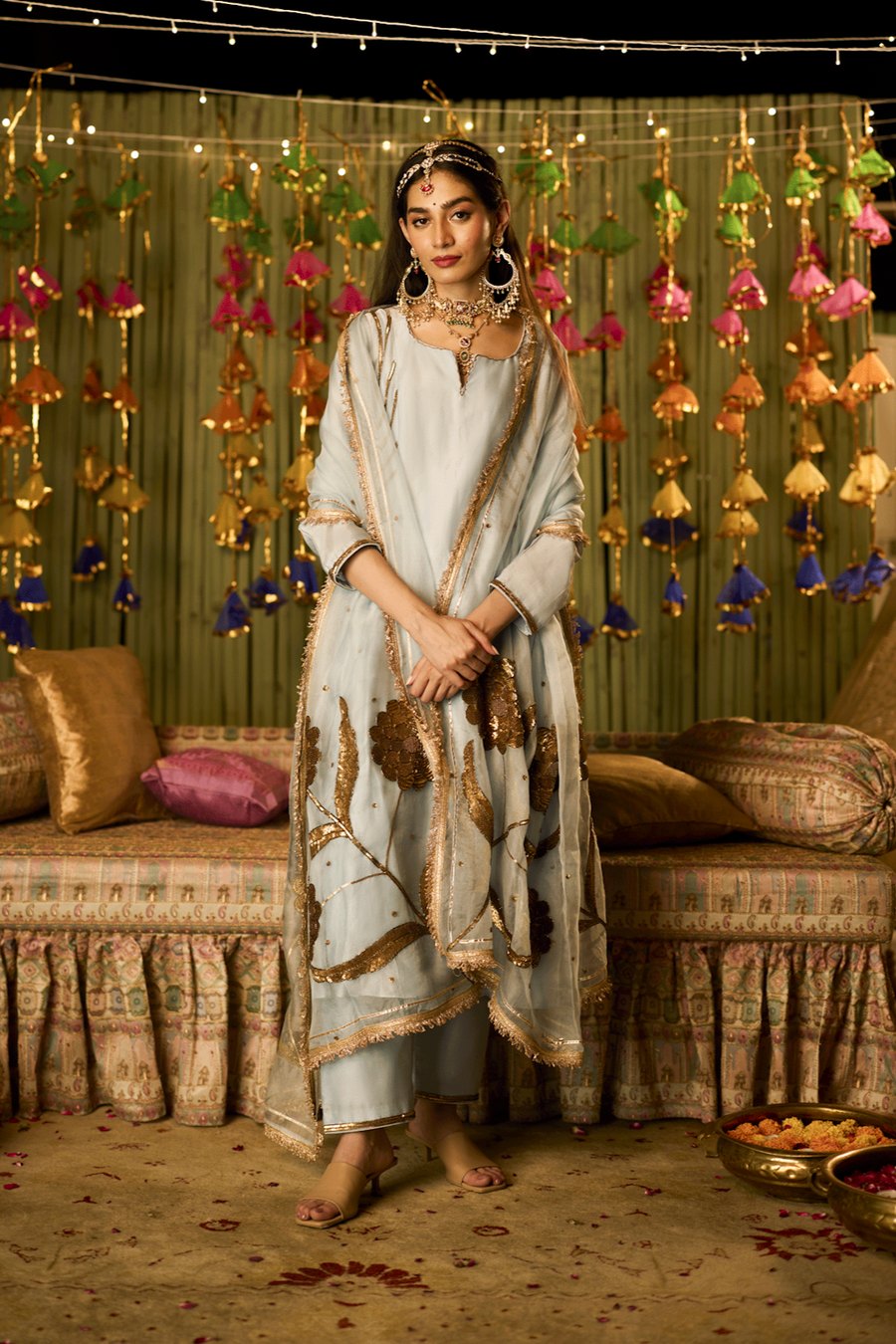
₹36,500
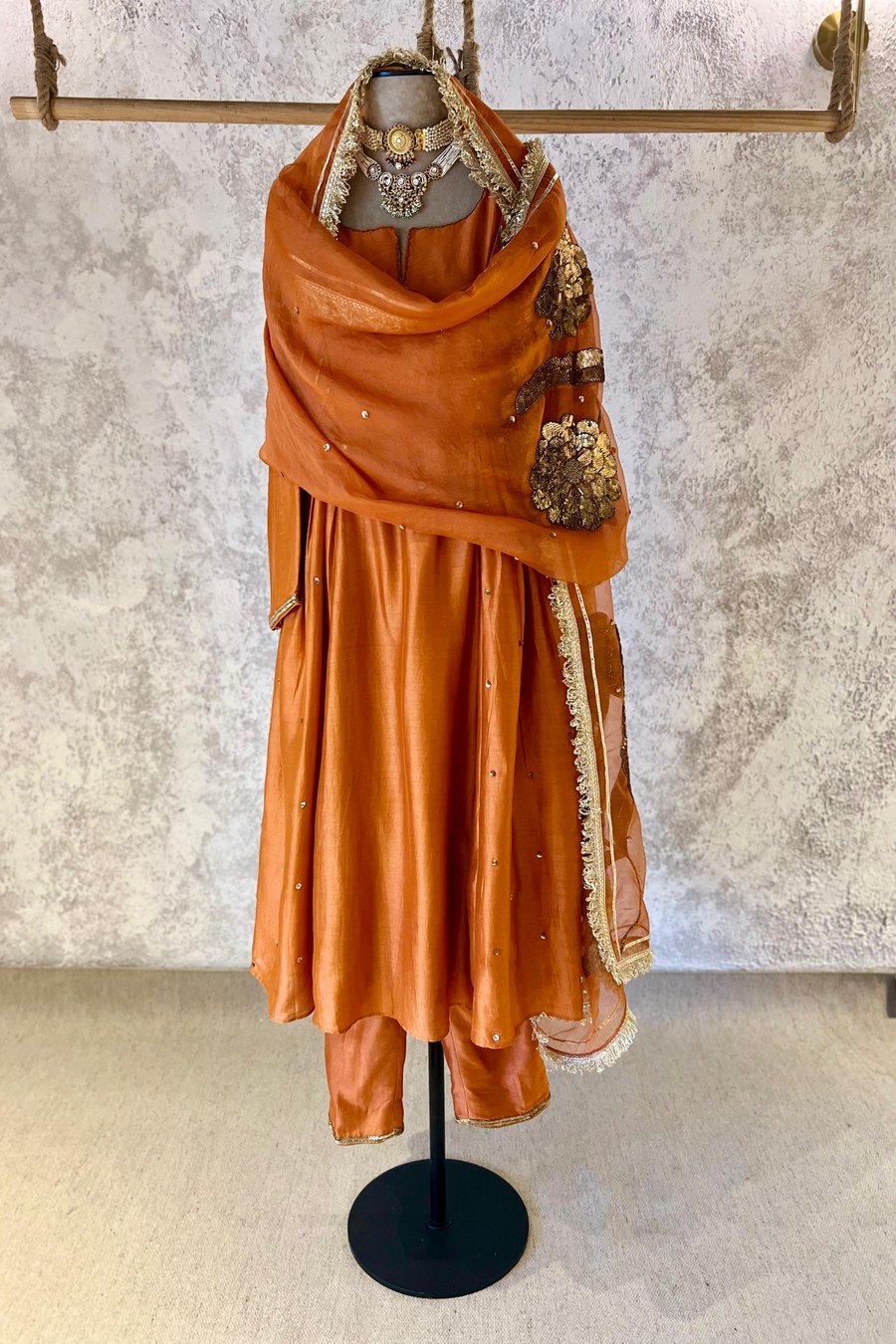
₹36,500
If you go with the lehenga instead
We would still want to be the ones who fit it. A lehenga lives or dies on two measurements people rarely give: the height of the waistband where you actually carry a skirt, and the length from that point to the floor in your shoes. Get those right and a borrowed blouse can be made to work. Get them wrong and the most expensive skirt in the shop will look like it belongs to someone else.
It also needs a petticoat decision at the start. Too soft and the flare collapses; too stiff and you cannot sit. That is a fitting-room conversation, not an online one, so come in if you can - Shahpur Jat or Dehradun - or send us your measurements and let us talk you through it on WhatsApp before anything is cut.
Care, and the cupboard question
Between functions, do as little as possible. Hang an anarkali from the waistband so the weight of the hem pulls the creases out and the embroidery is not carrying the load; keep the dupatta flat, because a heavy border hung by its own weight will stretch. A lehenga stores flat: skirt folded with the work facing inwards, blouse separate, dupatta rolled rather than folded on the same line twice.
No perfume on the work itself and no hot iron pressed directly onto metal thread - press from the inside, on cloth, or hang the piece for a day and let it fall. Our fabrics are dyed with organic dyes, which hold their colour well but do not enjoy a hot iron any more than the thread does.
For anything beyond that, ask us about the specific piece. Different work on different cloth wants different handling, and a general rule is how good outfits get damaged.
Frequently asked
Is an anarkali just a lehenga with a kurta attached?
In construction, close: the same volume of skirt, gathered into a bodice instead of a waistband. In effect, different. There is no waist seam to tie or adjust, no separate blouse to fit, and nothing to coordinate on the day - which makes it easier to wear and harder to alter. A lehenga can be rescued at the waist by a tailor; an anarkali has to be right from the pattern.
Which is easier if I will be dressing on my own in a hotel room?
The anarkali, by a distance. It is one piece, it goes on like a dress, and it does not need someone behind you to tie a waistband or pin a dupatta into a blouse. If you are travelling to a wedding without family around you, that is worth more than any styling advantage.
Can I wear an anarkali to a mehendi?
Yes, and it is one of the better choices. You can gather the skirt into your lap rather than kneeling on the work, and there is no waistband digging in while you sit on the floor. Keep the dupatta pinned back so it stays out of the artist's way, and choose something that reads in flat daylight rather than needing a spotlight.
I am short - does an anarkali make me look shorter?
It can, if the flare starts too low or the hem is too long; a full-length column with a late flare eats height. The fix is in the cut, not the garment: a flare that opens higher and a hem that clears the floor in your shoes will keep the line long. A lehenga solves the same problem the other way, by breaking the figure at the waist and widening the base.
How far in advance should I order either one?
Earlier than feels necessary. Nothing here is sitting on a rack in sizes - each piece is cut, embroidered and stitched for the person who ordered it, and wedding season is exactly when everyone orders at once. Tell us the date of your first function and we will tell you honestly what is possible.
Explore more: wedding 2026 · designer hand embroidered blouse — or message us on WhatsApp for styling help.

The information below is required for social login
Sign In
Create New Account