

An anarkali is the one outfit in a wedding wardrobe that has to hold a shape. A saree can be re-pleated on the morning of a function; a lehenga is tied and adjusted. An anarkali arrives already decided, because the bodice is stitched to the skirt at a waist se
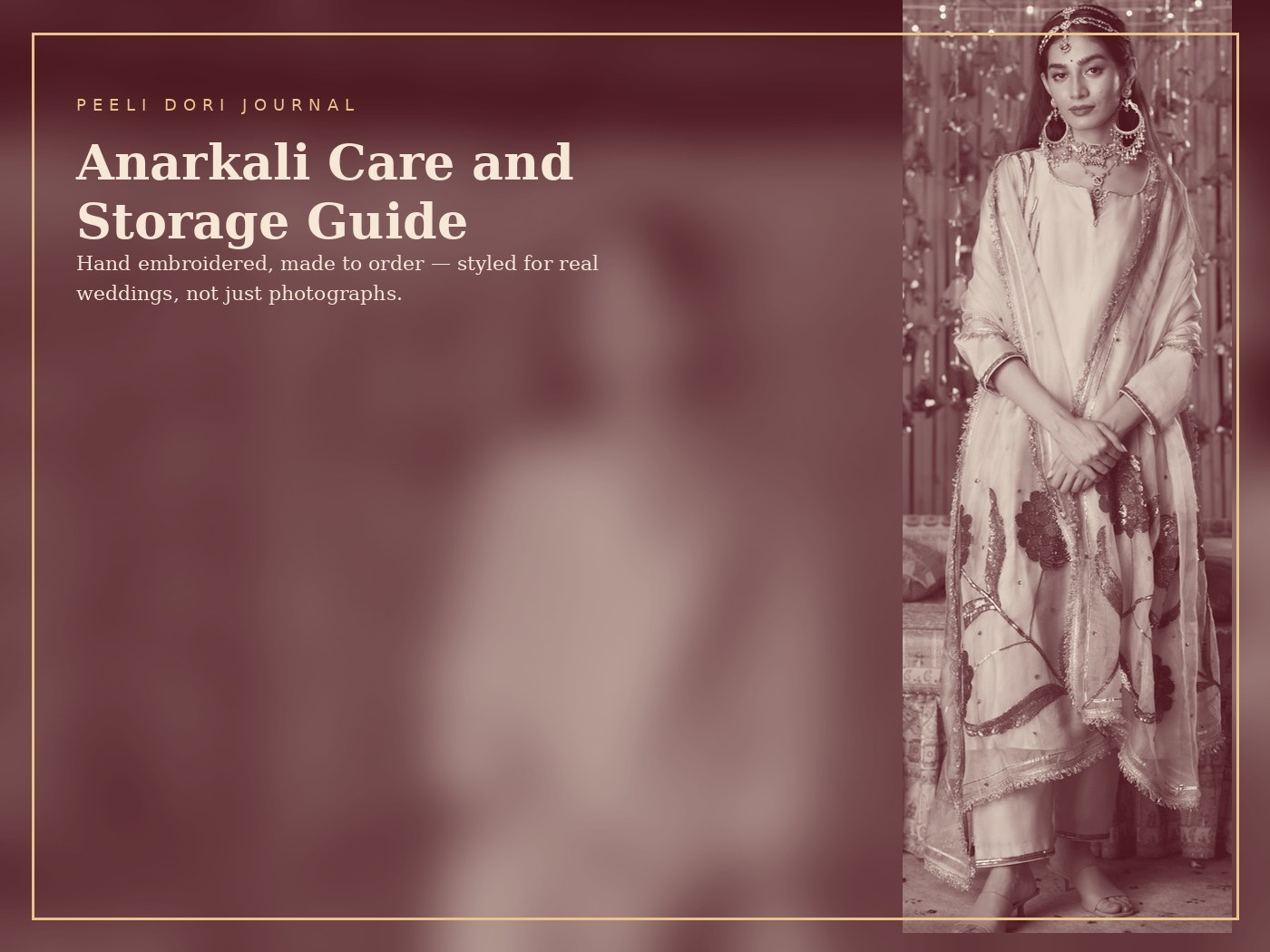
An anarkali is the one outfit in a wedding wardrobe that has to hold a shape. A saree can be re-pleated on the morning of a function; a lehenga is tied and adjusted. An anarkali arrives already decided, because the bodice is stitched to the skirt at a waist seam and the flare only opens the way it was last folded. Most of the damage we see is not the embroidery coming loose. It is the structure going soft.
An anarkali fails at the seams, not at the embroidery
When a customer brings a hand embroidered anarkali back to us for a look, the work is almost never the problem. The gota is still there. The zardozi has not moved. What has changed is the shape: the waist seam has stretched a little, the bodice front has a soft crease across the bust, the flare has taken the fold it was last stored on, and the dupatta has a line through it that steaming does not fully lift. Four small things, all of them decided by how the dress spent the eleven months between functions.
The reason is structural. There is a fitted bodice, usually lined, with darts and sometimes a little padding; it is joined to a skirt at a waist seam; that skirt is wide and heavy at the hem. Everything the skirt weighs is carried by a seam roughly 80 cm around. A saree can be re-pleated. A lehenga skirt can be re-tied. An anarkali has to keep the line it was cut to have.
The embroidery itself is tougher than people expect. Zari and dabka do not come off from sitting in a cupboard. They tarnish, they dull, and they snag on things — a plastic sleeve, the zip of a suitcase, a rough shelf edge. The threads that pull are nearly always pulled by something outside the garment.
So treat the dress as two things at once: a structured jacket above the waist and a heavy skirt below it. Those two want opposite handling, which is where most storage advice goes wrong.
Three parts, three different rules
The bodice wants space. Its shape comes from the cut and the lining, and a folded bodice will memorise a fold. If you have the room, hang the anarkali and let the skirt rest over the bar of the hanger instead of hanging free from the shoulders. That way the bodice keeps its line and the skirt is not pulling on the waist seam. If you have to fold, fold at the waist and never across the chest.
The flare wants to be folded along its own folds. A ghera has a natural set of them from the way it was cut and pressed. Fold it on those and it opens the same way next time. Fold it on a new line every time, or push it into a bag, and you get a crease that sits across the front of every photograph. The heavier the work at the hem, the more this matters, because weight sets a crease in.
The dupatta is a separate problem. Organza and chanderi hold a crease well, which is the point of them, and also the trouble. A dupatta folded flat in a suitcase for two days will show that fold for the whole function. Roll it around a cardboard tube or a rolled towel with a layer of tissue, and hang it out for a few hours when you arrive.
One part gets forgotten: the lining. Cotton and crepe linings absorb what the outer cloth does not — sweat at the underarm, a little oil at the neckline. If the lining is not aired, that is what you smell when you open the bag in three months, and by then it has reached the outer layer.
The first night matters more than the first year
An anarkali usually comes home at midnight in a bag, damp at the hem, warm at the underarms, and it stays there until the next morning or the next week. That is the night that decides how it looks in a year.
Take it out of the bag. Hang it, or lay it flat on a clean sheet, somewhere the air moves. Not in direct sun — organic dyes and strong colour do not want a windowsill — but not shut in a cupboard either. Twelve hours of air will do more for the smell and the creases than a dry clean.
Before anything else, look at three places: the underarm, the inside of the neckline, the hem. That is where a mark starts. If you find one, blot it with a dry white cloth from the edge inwards. Do not rub, and do not reach for a wet wipe. Water on hand embroidered cloth can lift a dye or leave a ring that is harder to live with than the original mark.
If a thread has come loose, leave it alone. Do not pull it to see how long it is. A loose thread can be laid back with a needle in two minutes; a pulled one can take a whole panel out of line. Fold the dress loosely, keep it dry, and deal with it in daylight.
Cleaning: what we recommend, and what we would not do
Hand embroidered cloth goes to a dry cleaner. Not because the work is fragile, but because the cloth under it usually is. Chanderi, silk, organza and tissue all behave differently in water, and a dress that mixes two of them in one garment gives you no safe middle. Tell the cleaner it is hand embroidered and ask for a hand finish and press. Most will take more care once they know what they are holding.
We would not machine wash, soak, wring, or treat a stain with a home remedy. Organic dyes can move. Salt, lemon, toothpaste and talcum powder are all things we have seen used on a mark, and all of them have a fair chance of making it permanent. If you must try something, try it inside a seam allowance near the hem first, and let it dry fully before you decide.
How often matters as much as how. A dry clean after every wedding is hard on cloth and on work. With no mark and no sweat, air it, brush it lightly with a soft brush, and put it away — then clean it at the end of the season, before it goes into storage. Storing a dress with an invisible mark is what turns a mark into a stain, because oil and sugar oxidise over months.
Ironing is where most home damage happens. Never put an iron directly on zari, gota, dabka or a mirror. Press from the inside with a cotton cloth between the iron and the cloth, on the lowest setting that works, and steam rather than press where you can. Do not press a sharp crease into the flare; you will see it every time the dress opens.
Folding, bagging, shelving
Cotton, not plastic. A plastic cover traps moisture, and moisture is what yellows light cloth and dulls metal work. A cotton or muslin bag lets the cloth breathe. If the anarkali came in a plastic sleeve, that sleeve is for transport, not for storage.
Tissue at the folds. A layer of acid-free tissue at the waist fold, along the front crease and inside the dupatta roll takes strain off the cloth. If you do not have acid-free, use clean white cotton. Avoid coloured or printed paper, which can transfer with time and heat.
Refold on a different line each season. Cloth remembers. A dress folded the same way for three years will keep a permanent line at that fold, and no amount of steaming will lift it. Once a season, before the weddings begin, open it, air it, and put it back differently.
Where you keep it matters more in Dehradun than in Delhi. Delhi dust gets into cloth and sits there, so a bag helps. Dehradun damp is the bigger problem: an anarkali kept in a closed cupboard through the monsoon can come out smelling of the cupboard, and in a bad year with faint mildew on the lining. Check it every three or four months, air it on a dry day, and keep it off an outside wall.
Do not hang a heavy anarkali on a thin wire hanger for months. The hanger will not fail; the shoulder seam will. Use a wide padded hanger, or a shelf.
Packing one for a wedding in another city
The flare takes the space. Roll the skirt from the hem upwards, loosely, with tissue between the layers, and let the bodice lie flat on top in the case. Roll the dupatta separately around a tube and put it in the middle, where nothing presses on it.
Carry it if you can. If it has to be checked in, pack it inside a cotton bag inside the case and put nothing heavy on top. A zip running over embroidery for six hours will find a thread.
At the hotel, hang it in the bathroom while you shower. Ten minutes of steam drops most travel creases and is gentler than an iron. Then hang it somewhere with air until morning. If you travel with a steamer, use it from inside the garment rather than directly on the work.
Pack a small repair kit: two hook-and-eye sets, a needle, and a thread that matches the ground cloth rather than the embroidery. A hook that gives way at nine in the evening is a five-minute fix, or a ruined evening.
Six anarkalis, and what each one asks of you
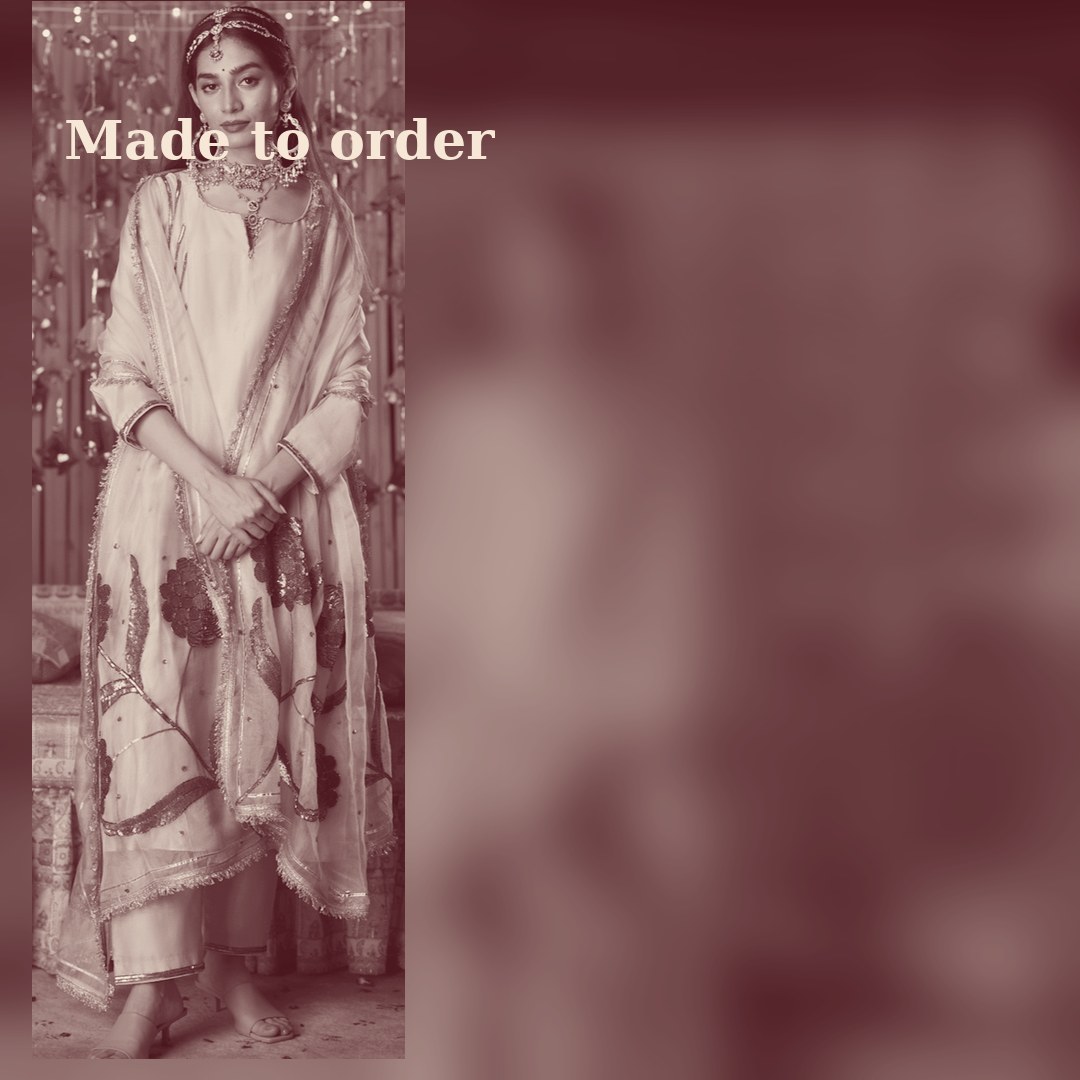
The three Gulmohar colourways at ₹44,500 are the same cut, so the care is identical and the choice is about how much the colour will show. The coconut is the lightest of the three and the least forgiving of a splash at dinner, which means it is the one we would keep for an indoor function and store with a little more attention. The gulabi pink hides far more, and the powder blue sits between the two.
The Nayanthara anarkali at ₹36,500 is a deep purple, and deep colour has its own rule: keep it out of direct sun and away from a hot car window, because strong dye fades unevenly — the shoulder fades first while the pleats keep their colour. The Madu powder blue and the Madu rust at ₹36,500 are the two we would pack first for a wedding in another city, since both come out of a suitcase looking like themselves. Madhurima at ₹34,500 is the plainest of the group and the easiest of the six to look after.
All of these are made to order with custom sizing, so the fit is settled before the cloth is cut. If your measurements changed between the engagement and the wedding, tell us when you order rather than after. A small fit question on WhatsApp before the order is much cheaper than an alteration later.
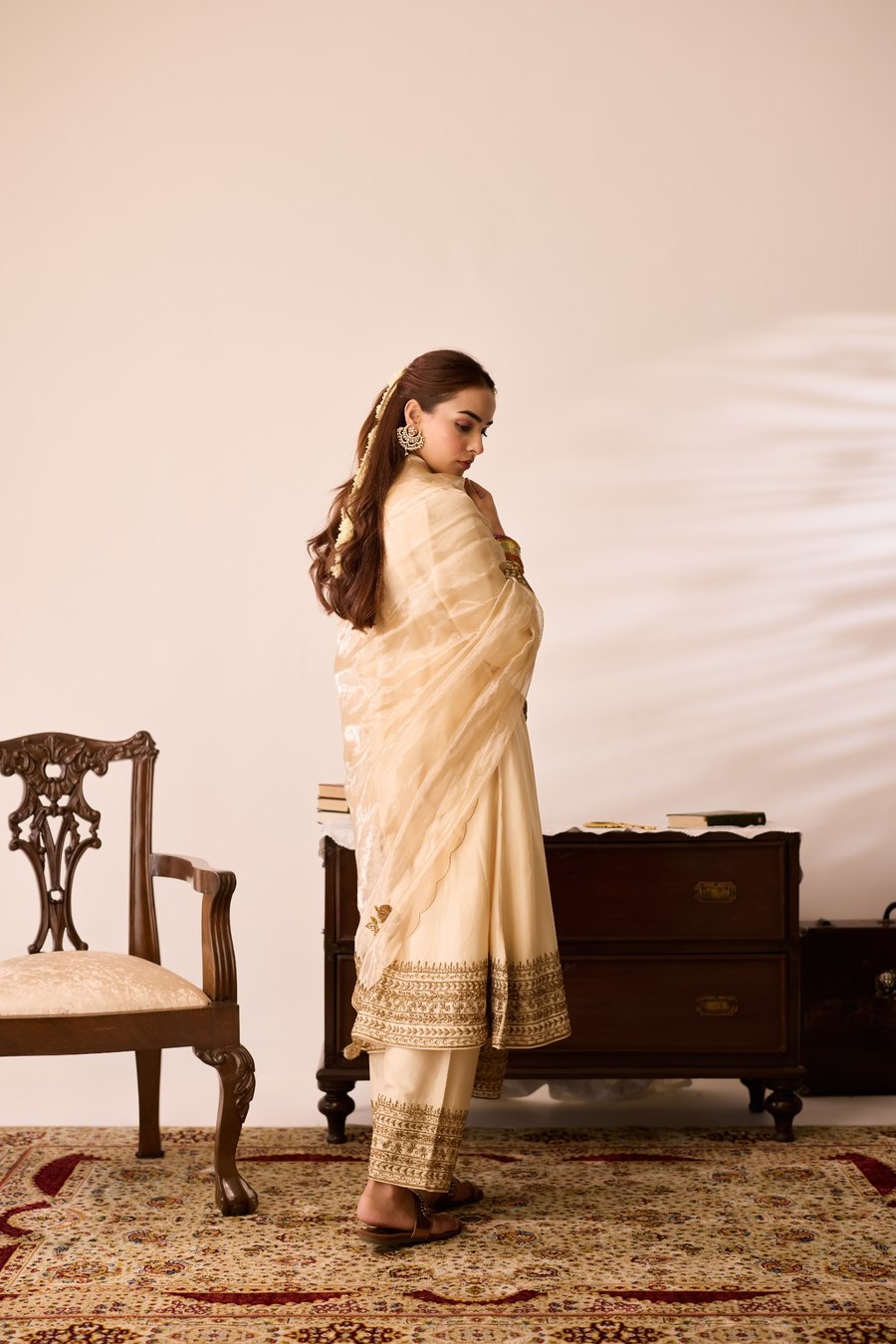
₹44,500
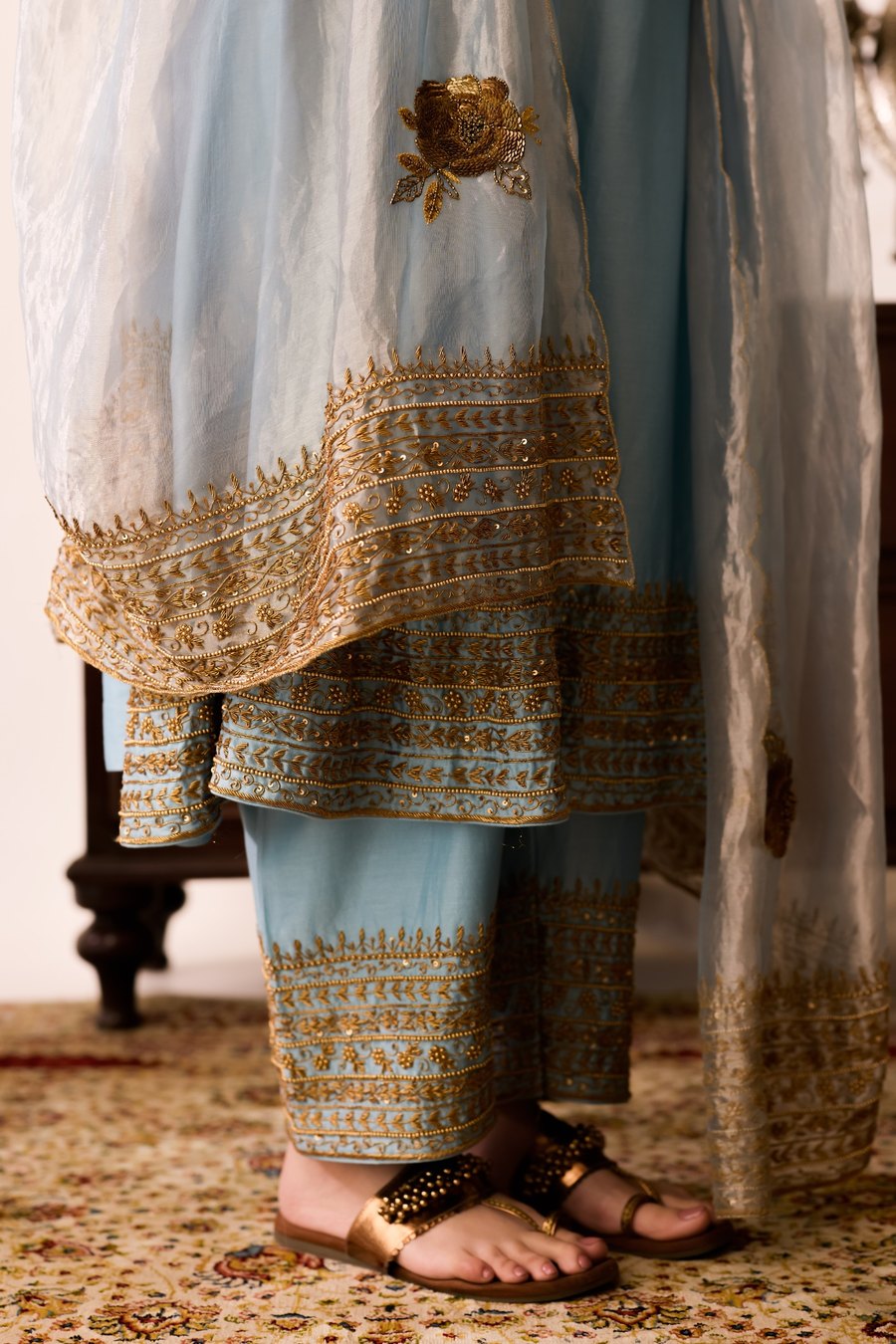
₹44,500
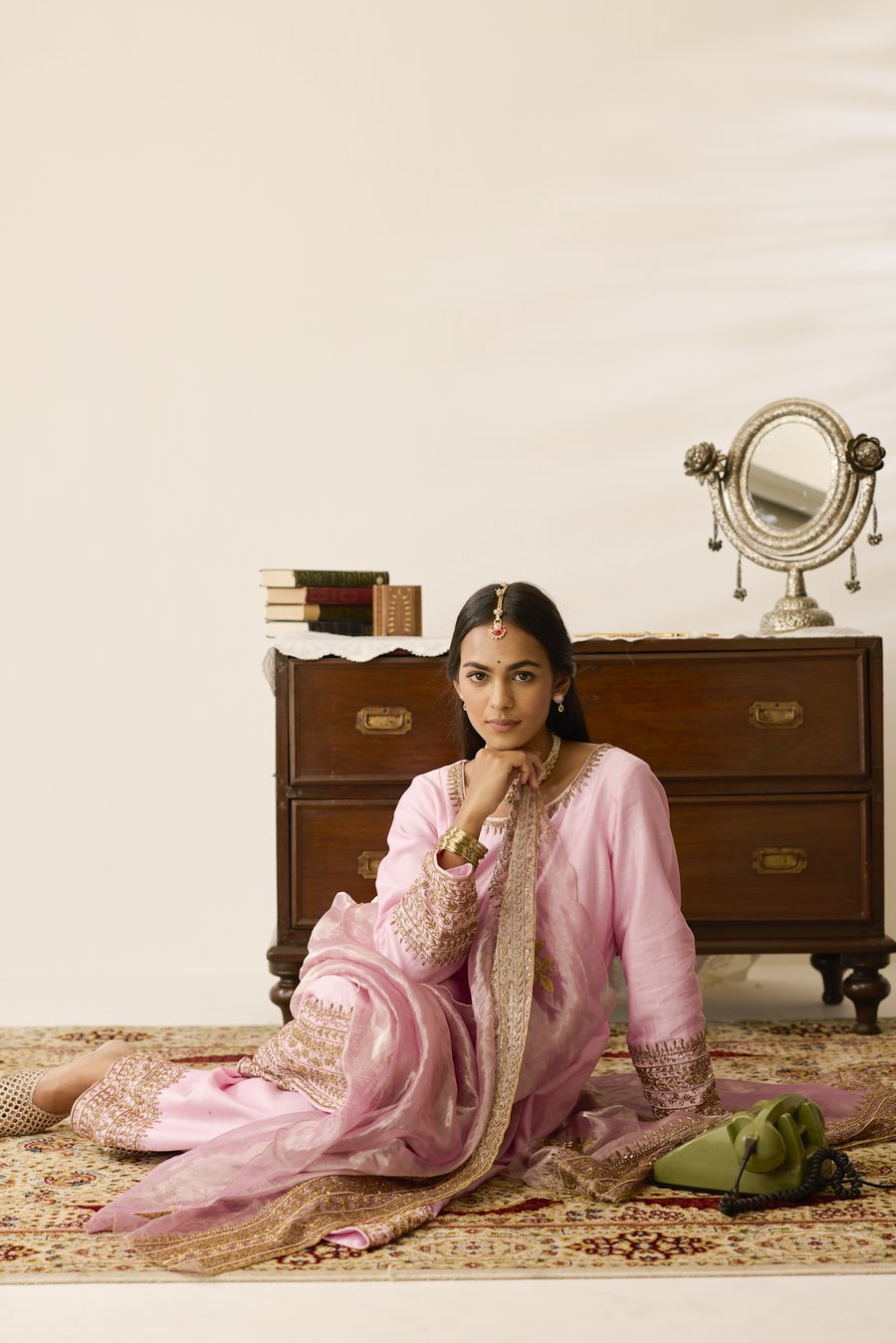
₹44,500
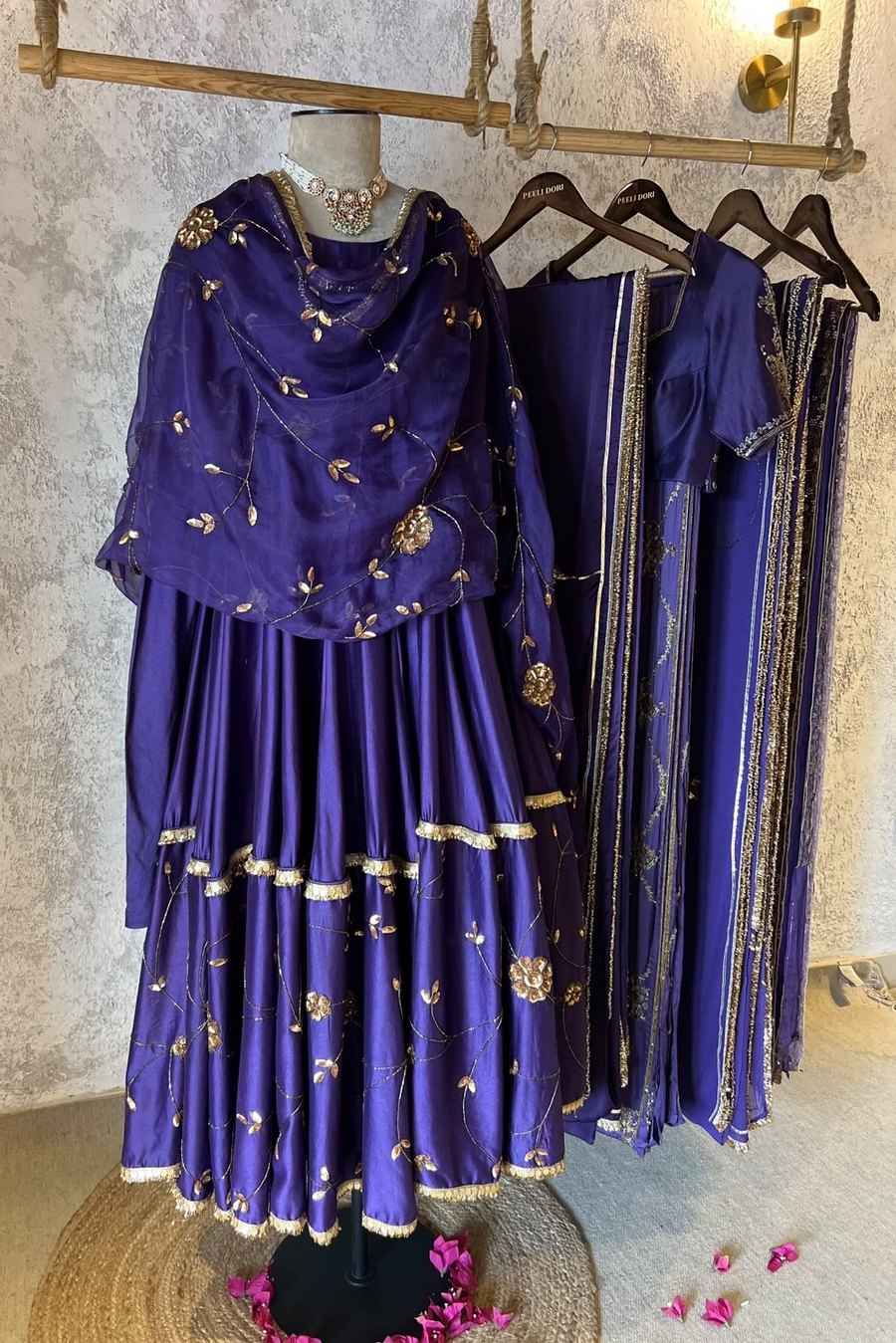
₹36,500
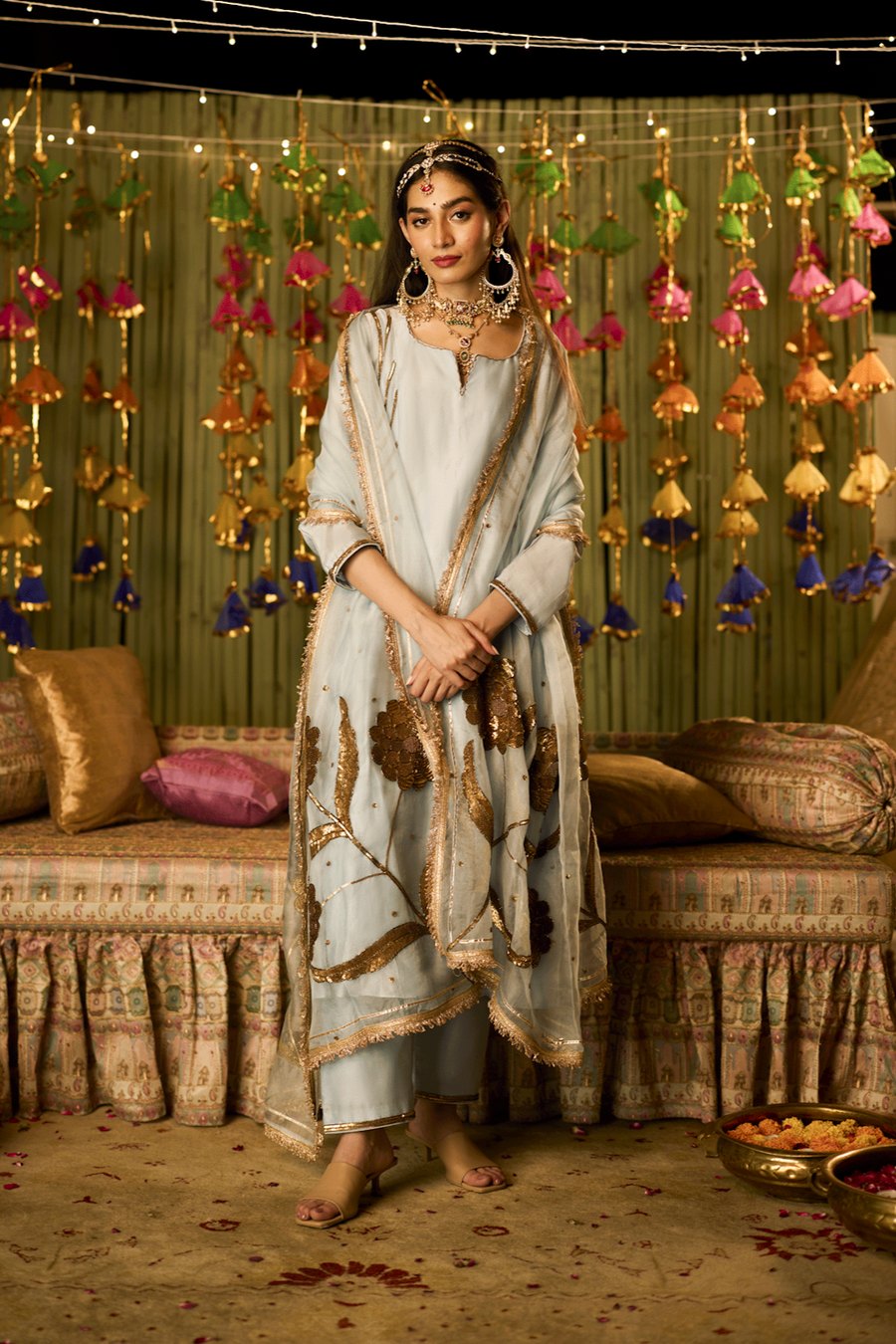
₹36,500
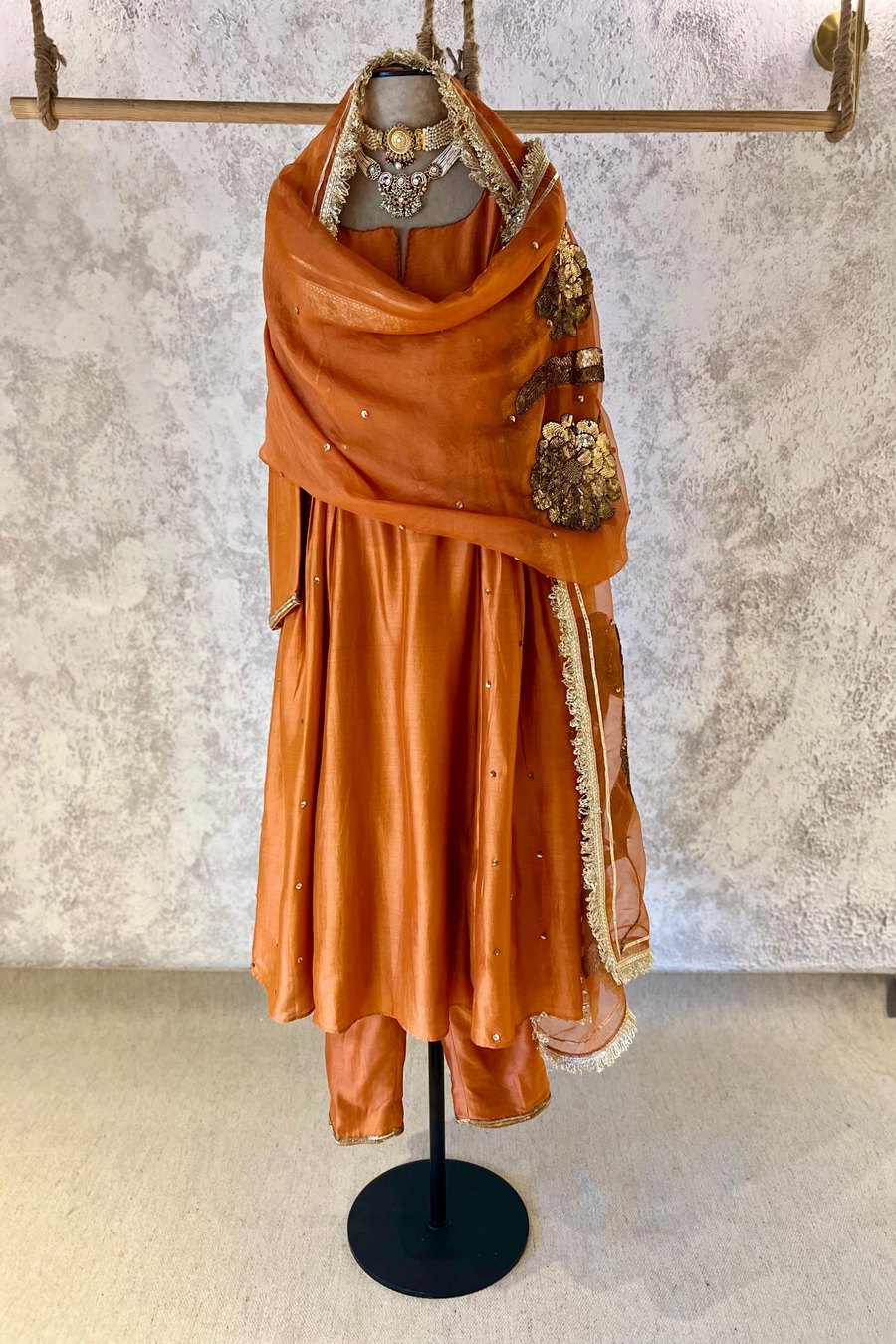
₹36,500
Repairs, and the things not to try at home
A loose zari thread, a mirror that has come unstitched, a hook and eye that has pulled through the cloth, a hem that has dropped on one side — all of these are straightforward for someone who works with the cloth every day. Bring it to either store, Shahpur Jat in Delhi or Dehradun, and we will tell you honestly whether it is a repair or a remake.
Do not glue. Fabric glue dries hard on an embroidered surface, yellows with age, and makes the proper repair harder. Do not cut a loose thread at the knot; unpick it from the back if you can, or leave it. Do not flatten a curled hem with an iron; it will mark the fold.
And if the dress is due at another wedding in three weeks, say so when you hand it over. A repair that has to be invisible under function lighting is a different job from one that can wait for the season, and we would rather know which you need.
Frequently asked
Can I wash a hand embroidered anarkali at home?
No. Send it for dry cleaning, ask for a hand finish and press, and tell them it is hand embroidered. Water, wringing and home stain remedies can move an organic dye or distort the cloth under the work, and neither is easy to undo.
How do I store an anarkali so the flare keeps its shape?
Fold at the waist rather than across the bodice, fold the flare along its own folds with tissue between the layers, and keep it in a cotton bag instead of plastic. Refold on a new line once a season so the cloth does not set a permanent crease, and avoid hanging a heavy one from a thin wire hanger for months.
Can I iron an anarkali myself?
From the inside, on low heat, with a cotton cloth between the iron and the garment. Never press directly on zari, gota or a mirror. Steam is safer than pressing, and do not press a sharp crease into the flare — it will show when the dress opens.
Does it need dry cleaning after every wedding?
Not necessarily. With no mark and no sweat, air it overnight, brush it lightly, and store it. Clean it at the end of the season before it goes away, because an invisible mark left on the cloth for months oxidises and becomes much harder to remove.
What should I do if a thread or a mirror comes loose?
Leave the thread alone — pulling it can take a panel out of line — and bring the dress to Shahpur Jat or Dehradun. If you cannot come in, message us a photograph on WhatsApp and we will tell you what it needs.
Explore more: wedding 2026 · designer hand embroidered blouse — or message us on WhatsApp for styling help.

The information below is required for social login
Sign In
Create New Account