

The mother of the bride is the only person at a wedding who is in almost every photograph and also running the day. She greets, she bends to touch feet, she sits on the floor for the puja, she stands for the group shots at eleven at night. An anarkali is the o
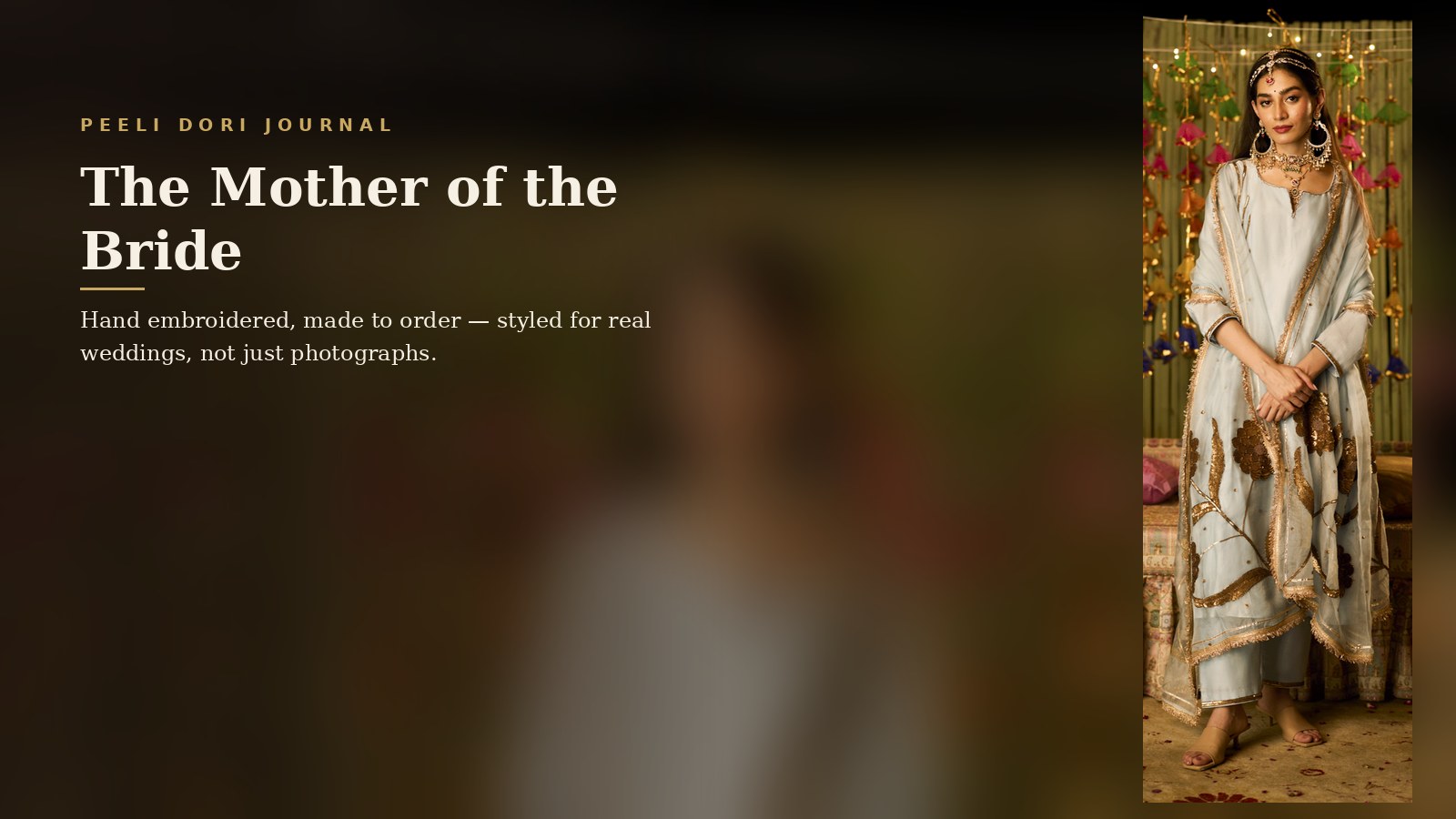
The mother of the bride is the only person at a wedding who is in almost every photograph and also running the day. She greets, she bends to touch feet, she sits on the floor for the puja, she stands for the group shots at eleven at night. An anarkali is the one outfit that assumes all of that will happen. The bodice is already fitted, the skirt opens when she sits, and there is nothing to re-pin between functions except the dupatta.
The mother of the bride has a different job from everyone else
The bride's outfit is designed for one walk, one set of photographs and a seat. The mother's outfit has to survive the morning haldi, the mehendi in the afternoon, the wedding itself and often a reception three days later, in a house full of guests, usually while answering questions about the caterer.
Two things come up every time a mother comes to us for a wedding outfit. The first is some version of "I don't want to look like I am trying to be the bride." The second is "I need to be able to move." They sound like different requests. They are the same brief: an outfit that is clearly finished, clearly hers, and does not need managing.
This is where an anarkali earns its place. A saree is more forgiving on size and more flexible in how it is worn, but it needs a firm petticoat, careful pleating and usually a second pair of hands before she can leave the room. A lehenga needs the skirt tied at the right height over the right blouse, and then re-tied if it slips. An anarkali is one garment with one waist seam. She steps into it, zips it, pins the dupatta and is done.
What the day actually asks of the outfit
A wedding day is six to ten hours on her feet with two or three sittings in between. She will bend forward more than she expects, sit cross-legged on a floor for a puja, climb stairs to a stage, hold a heavy tray, and hug perhaps two hundred people. Photographs will be taken in daylight, in shade under a tent, and at night with a flash.
The waist seam is the part that decides how the day goes. A stitched skirt spreads when she sits and falls back into its own folds when she stands. A saree's pleats collapse at the knee after twenty minutes and have to be rebuilt. A lehenga's skirt has to be gathered by hand every time. If she is hosting, this difference is felt hourly, not once.
Weight matters more than people think. Embroidery at the hem gives a beautiful line and steadies the flare, but every gram of it is carried by the waist seam. If she will be standing and greeting for four hours, a piece with the heaviest work on the bodice and the dupatta, and a lighter middle, is easier on the shoulders and the lower back. If she will mainly walk in, sit and be photographed, a heavier hem is worth it.
The dupatta is the only part that needs a decision at the venue. A stiff organza or tissue pallu stays where it is pinned and survives a crowd. A soft one slides off the shoulder in the first ten minutes. For a mother who is working the room, pin it at both shoulders for the greeting line, then release one side for photographs.
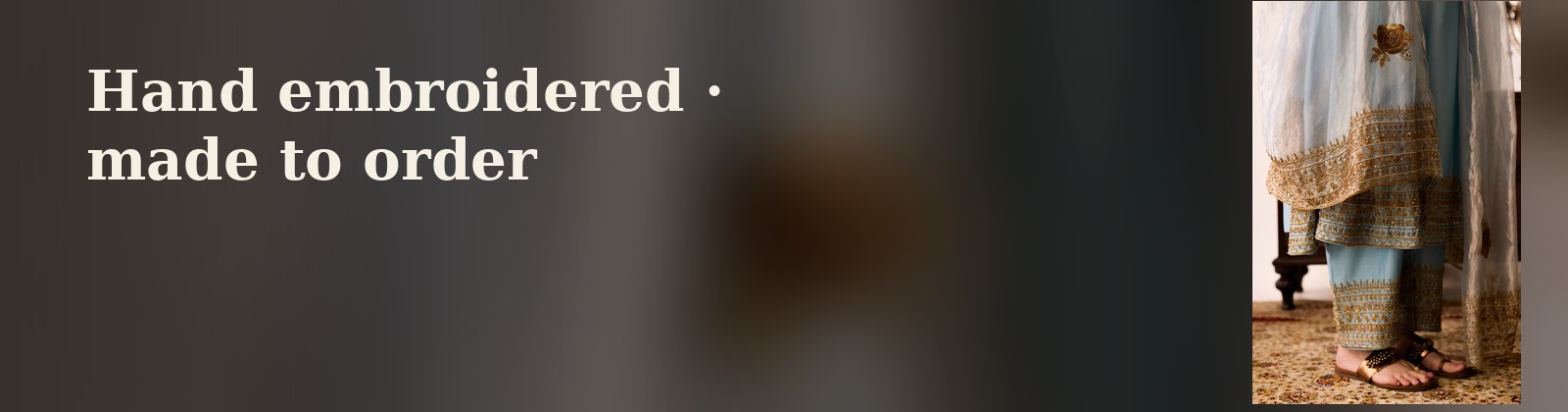
Fabric and craft: how to read a piece in ten minutes
Chanderi is the quiet choice. It is light, matte rather than shiny, holds a flare well and does not fight the embroidery. It is what we would suggest for a daytime mehendi or a haldi where she is moving between the house and the lawn. It creases, so it wants a proper press before she leaves, not a hopeful shake.
Silk organza is the evening choice. It has a crispness that keeps the skirt away from the legs, holds a pleat, and catches light without glittering. It is warmer than chanderi and less forgiving of a crease set in a car, so it suits a function where she arrives and stays rather than travels between venues.
Gota is flat ribbon work and it reads at a distance, which matters in a group photograph. Zardozi and dabka are raised metal thread: heavier, richer in low light, and harder on the cloth underneath. A full zardozi bodice with a heavy skirt is a great deal of weight for a long day, and a great deal of presence for a reception where the light is low. Neither is better. They answer different hours of the wedding.
In the ten minutes you have in a store, check five things. Is the bodice lined, and does it sit flat across the chest without pulling? Can she raise both arms above her head without the waist seam lifting? Is the hem finished with a facing or a guard, so it will not fray on stone floors? Is the dupatta finished on all four edges? And does the inside of the waist seam look as clean as the outside? That last one tells you how the rest of the garment was made.
Colour behaves differently in different light. Deep purple, rust and strong pink hold their shape in a flash photograph at night. Coconut, ivory and pale blue are lovely in daylight and can lose their embroidery in a dark banquet hall, where the camera reads the whole outfit as one bright block. If the reception is at night, either go deeper in colour or plan jewellery that gives the eye something to hold.
Three questions to settle before choosing
First, what will she actually be doing in it? Hosting and being photographed are two different garments. A mother who is receiving guests, supervising the rooms and walking between the house and the venue needs a lighter skirt, a secured dupatta and sleeves that do not restrict her. A mother who walks in, sits through the ceremony and stands for photographs can carry more work and a wider flare.
Second, which function is this for? Daytime wants chanderi, lighter colour, less metal. Evening wants organza or tissue, deeper colour, more light in the work. If she is buying one outfit for the whole wedding, build it for the ceremony, which is the longest and the most photographed, and let the reception be the place she re-wears something she already owns.
Third, what is the bride wearing? Ask for the bride's palette before choosing a colour. The aim is to sit beside her in a photograph, not to match her. If the bride is in red, a deep green, purple or gold reads as family rather than competition. If the bride is in pastel, her mother can carry the deeper tone that keeps the frame from going flat. The one thing to avoid is being in the same colour family at the same strength.
Fit is the other half of this. The bodice is the measurement that matters, then the shoulder and armhole, then the length from waist to floor with the heels she will actually wear. Bodies change between the order and the wedding, especially in a stressful month. Tell us rather than hope. Custom sizing exists precisely so that a measurement can be taken again.
Six anarkalis, and the role each one plays
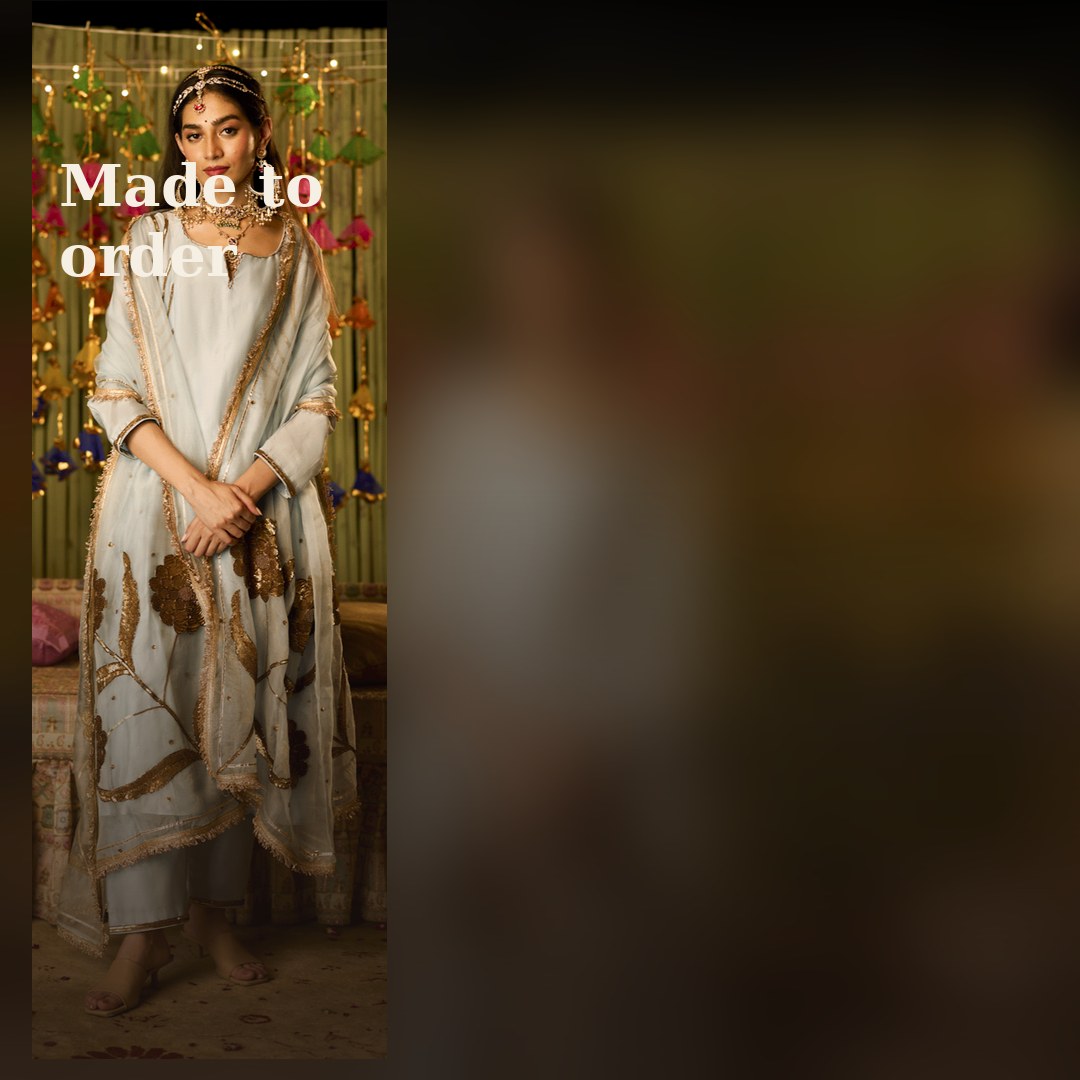
The three Gulmohar anarkalis at ₹44,500 are the same cut in three colourways, so the choice between them is a choice about light and photography. The coconut is the softest and the most beautiful in daylight, and the least forgiving of a splash at dinner. The powder blue sits between day and evening and photographs well against a pastel bride. The gulabi pink is the one we suggest most often for a mother who will be in a warm-toned wedding, because strong pink holds its colour in a flash and does not go flat in a group shot.
The Nayanthara anarkali at ₹36,500 is a deep purple, and purple is the most reliable colour for a night function. It keeps its depth under low light and works with the gold most mothers already own, which means no new jewellery. It is the piece we would put on a mother who is hosting the reception.
The two Madu sets at ₹36,500 are the easier wear. The rust is a daytime colour that flatters warm and neutral skin alike, and it is the one most likely to be worn again to a friend's wedding. The powder blue is the lighter option for a sangeet, where the photographs are more casual and the evening is longer.
Madhurima at ₹34,500 is the plainest of the six and the one we recommend when a mother wants an outfit she can wear twice in a season without anyone noticing. Not every wedding needs a first-look piece. Sometimes the right answer is a quiet anarkali with good cloth and enough work to hold its own in a photograph.
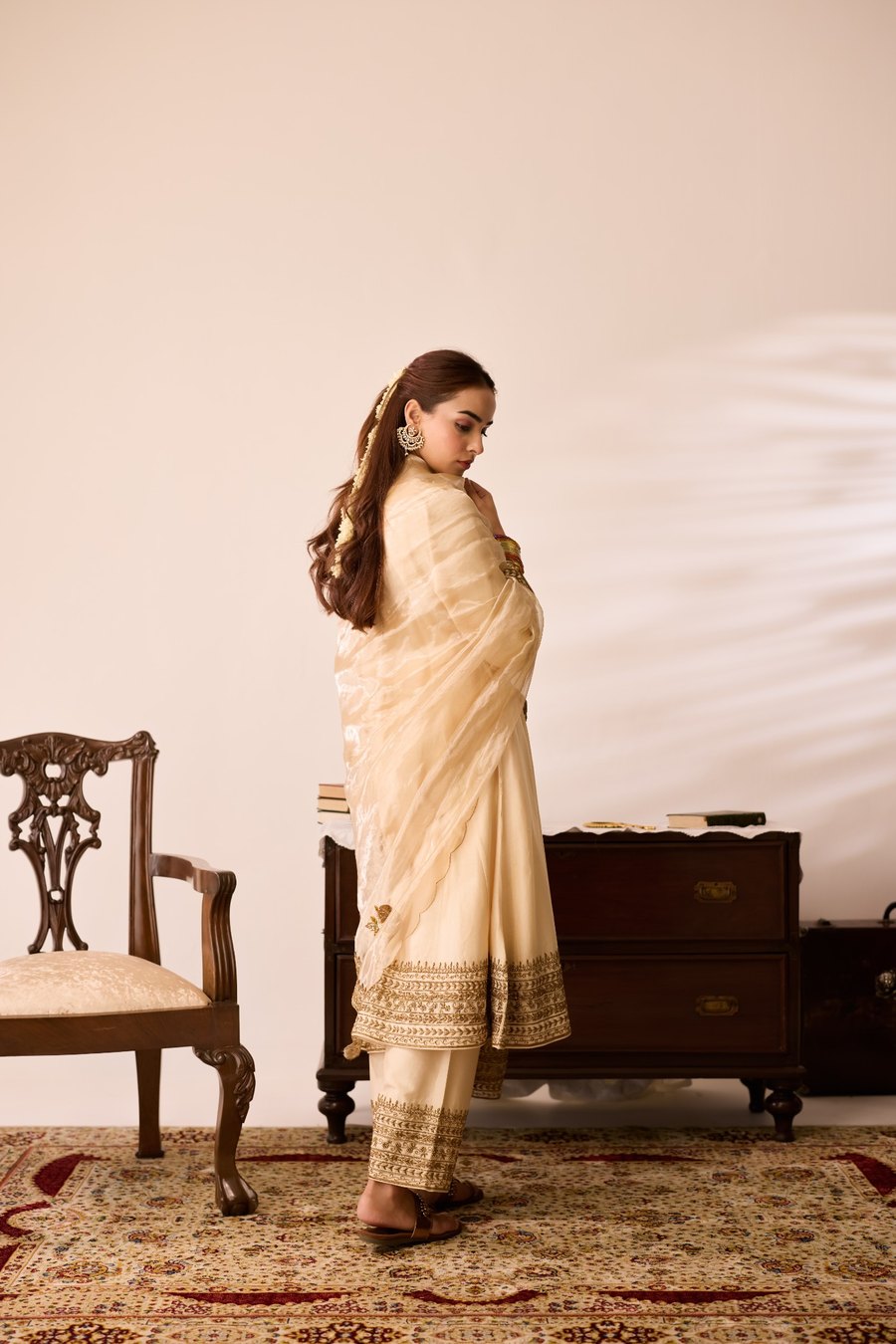
₹44,500
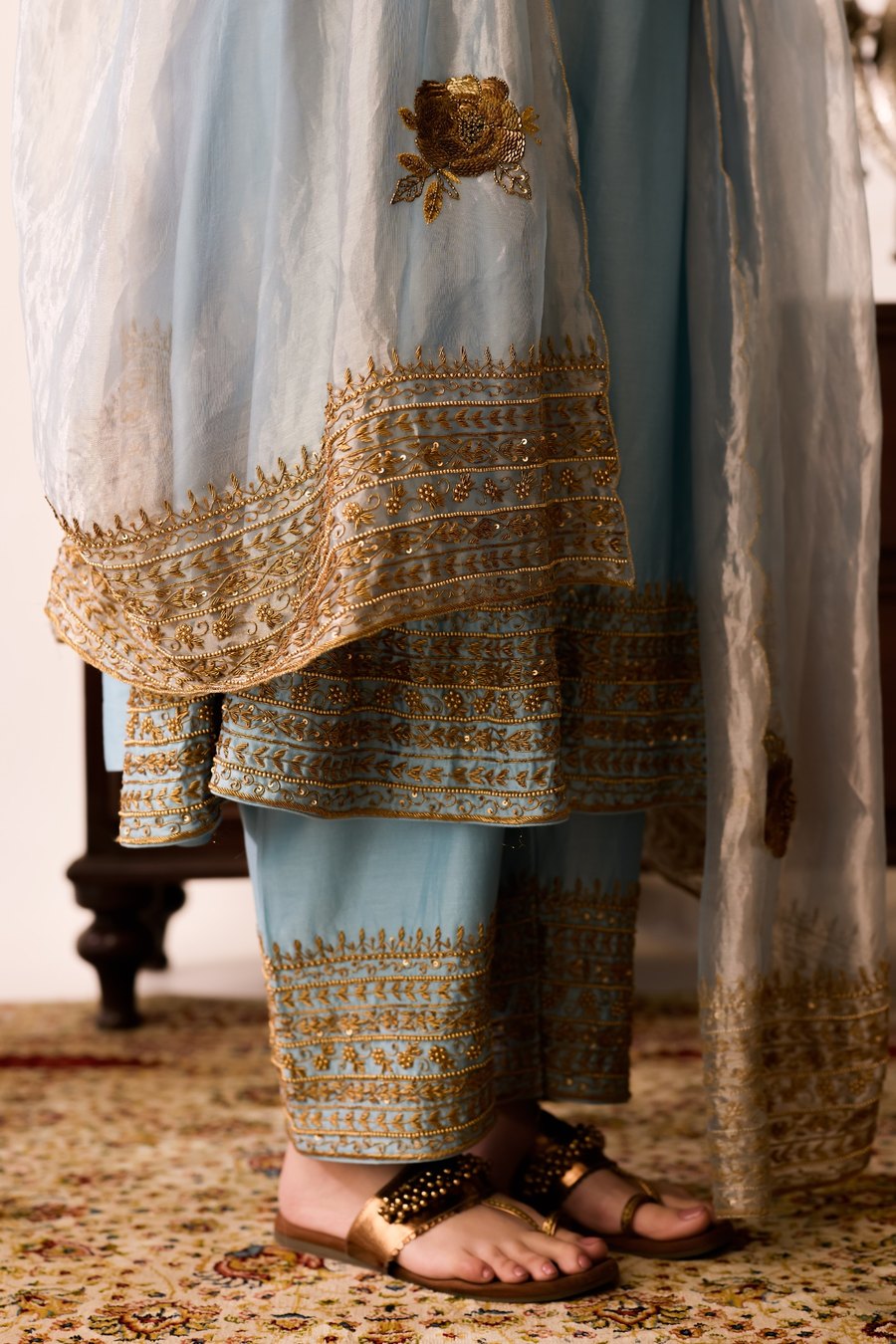
₹44,500
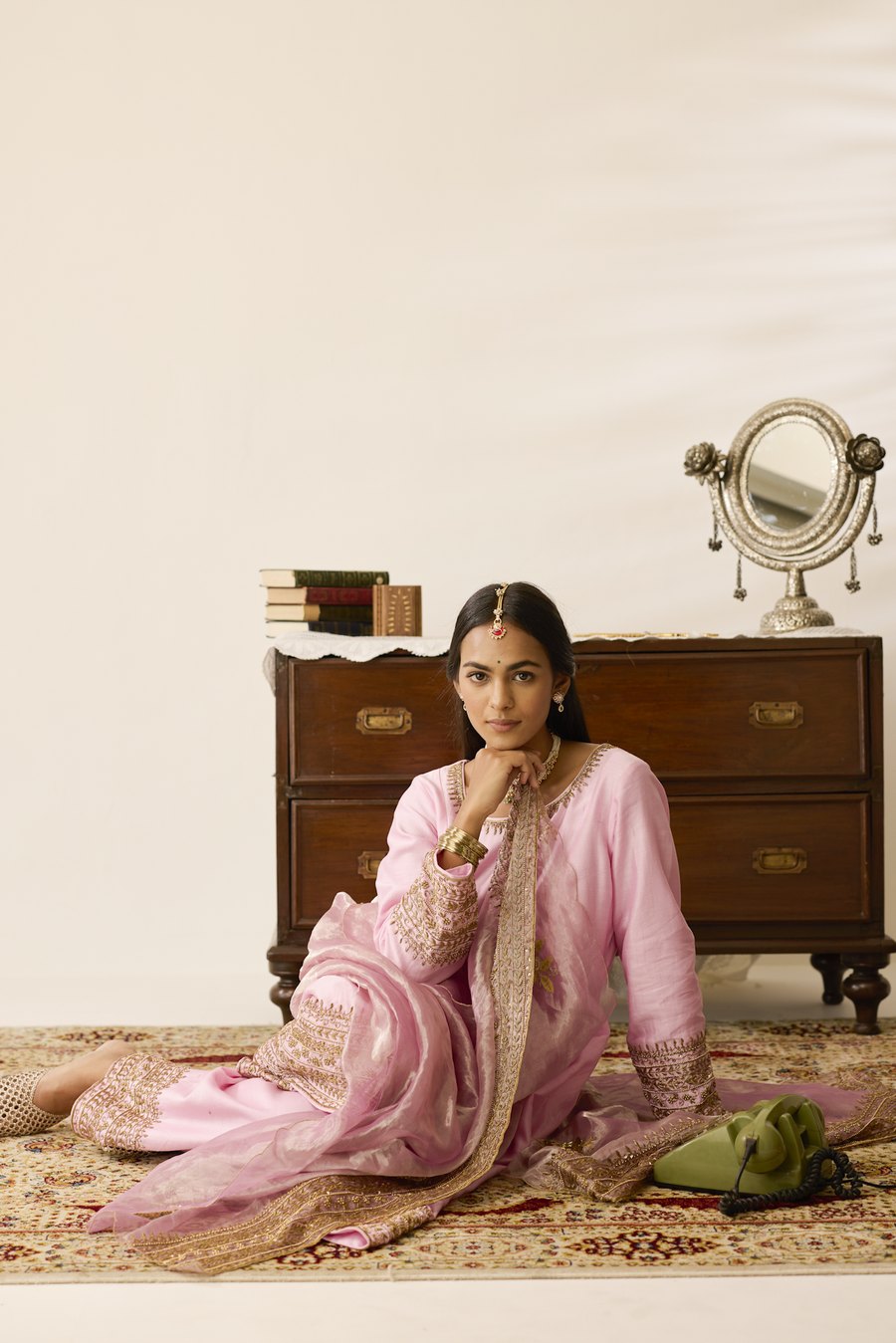
₹44,500
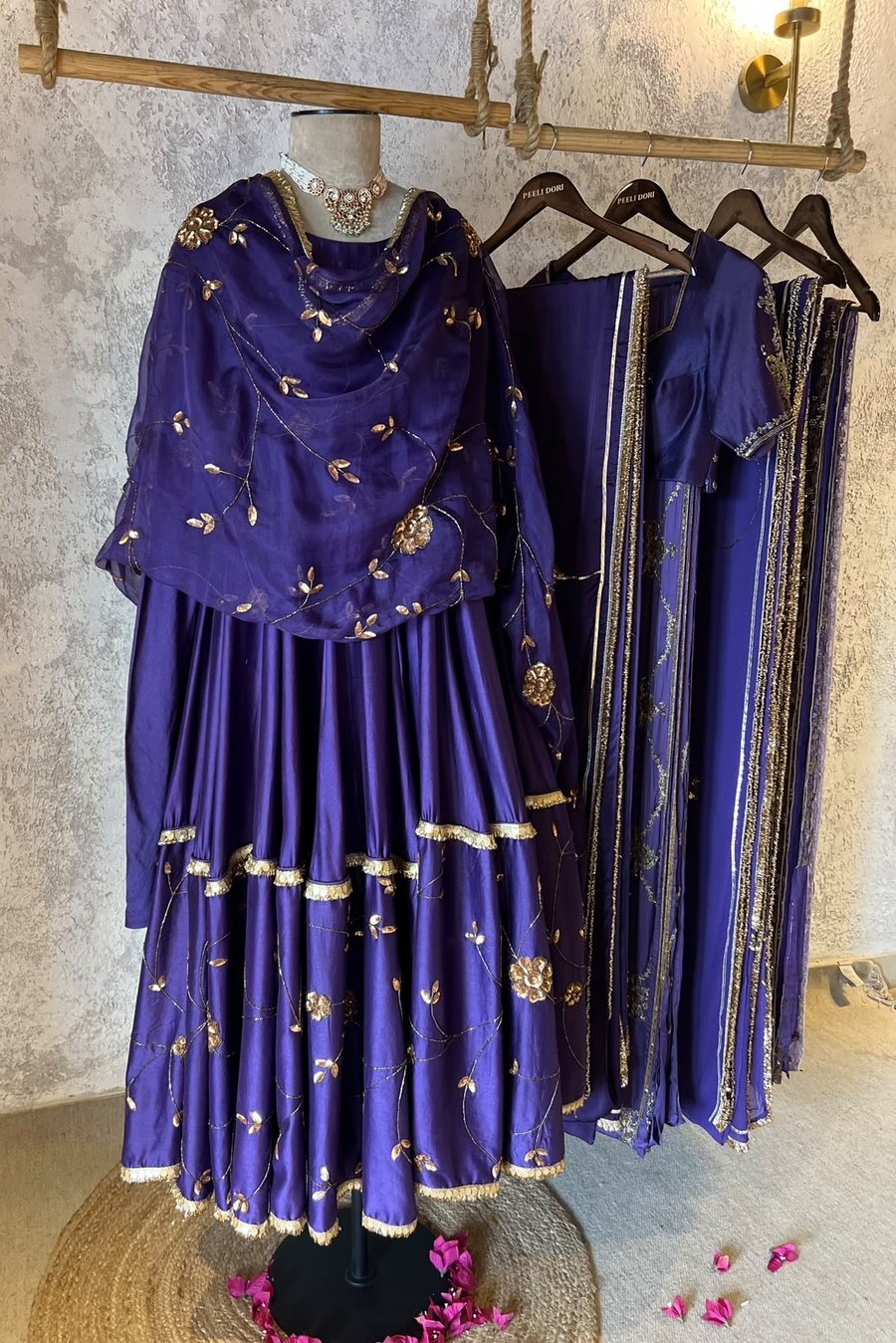
₹36,500
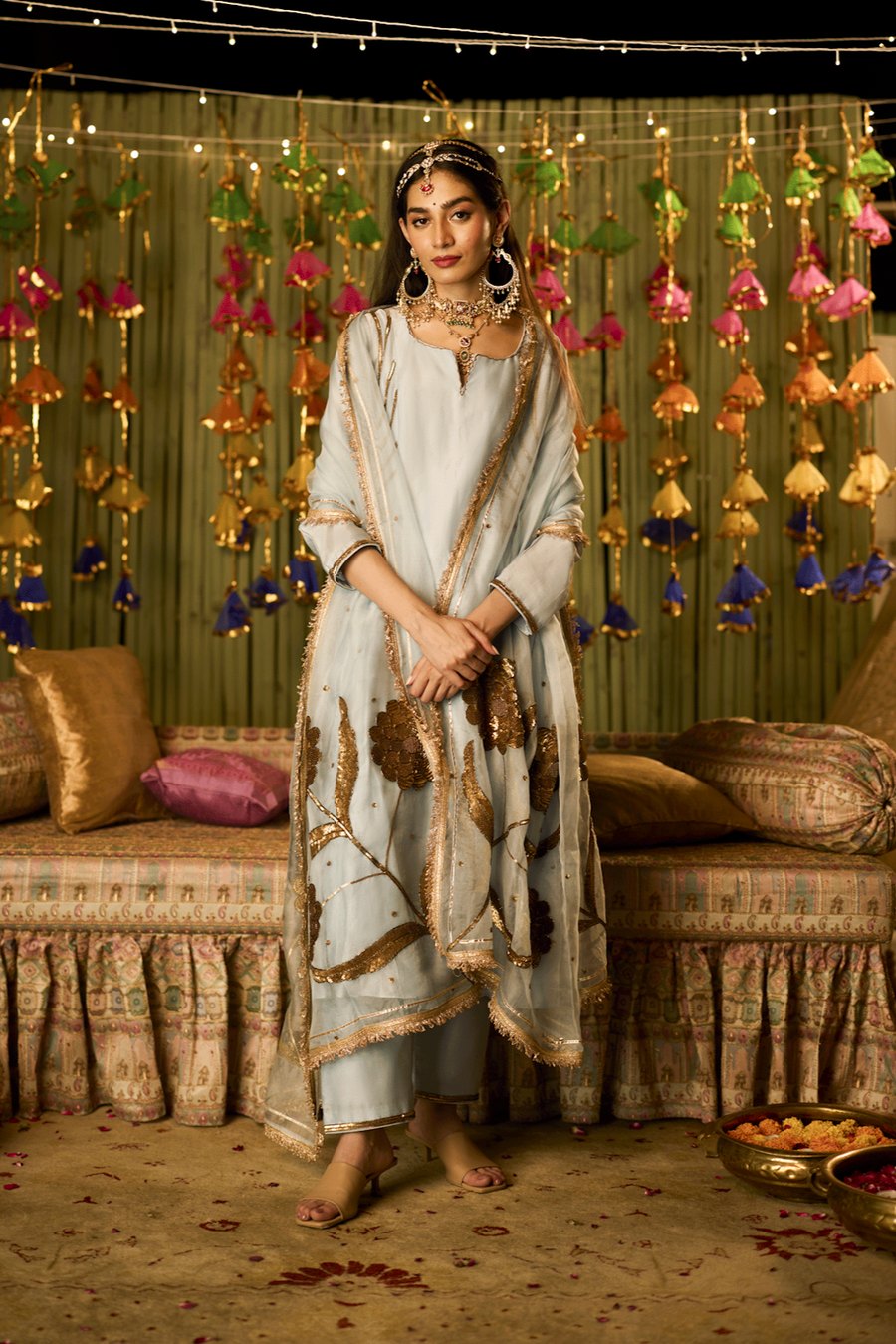
₹36,500
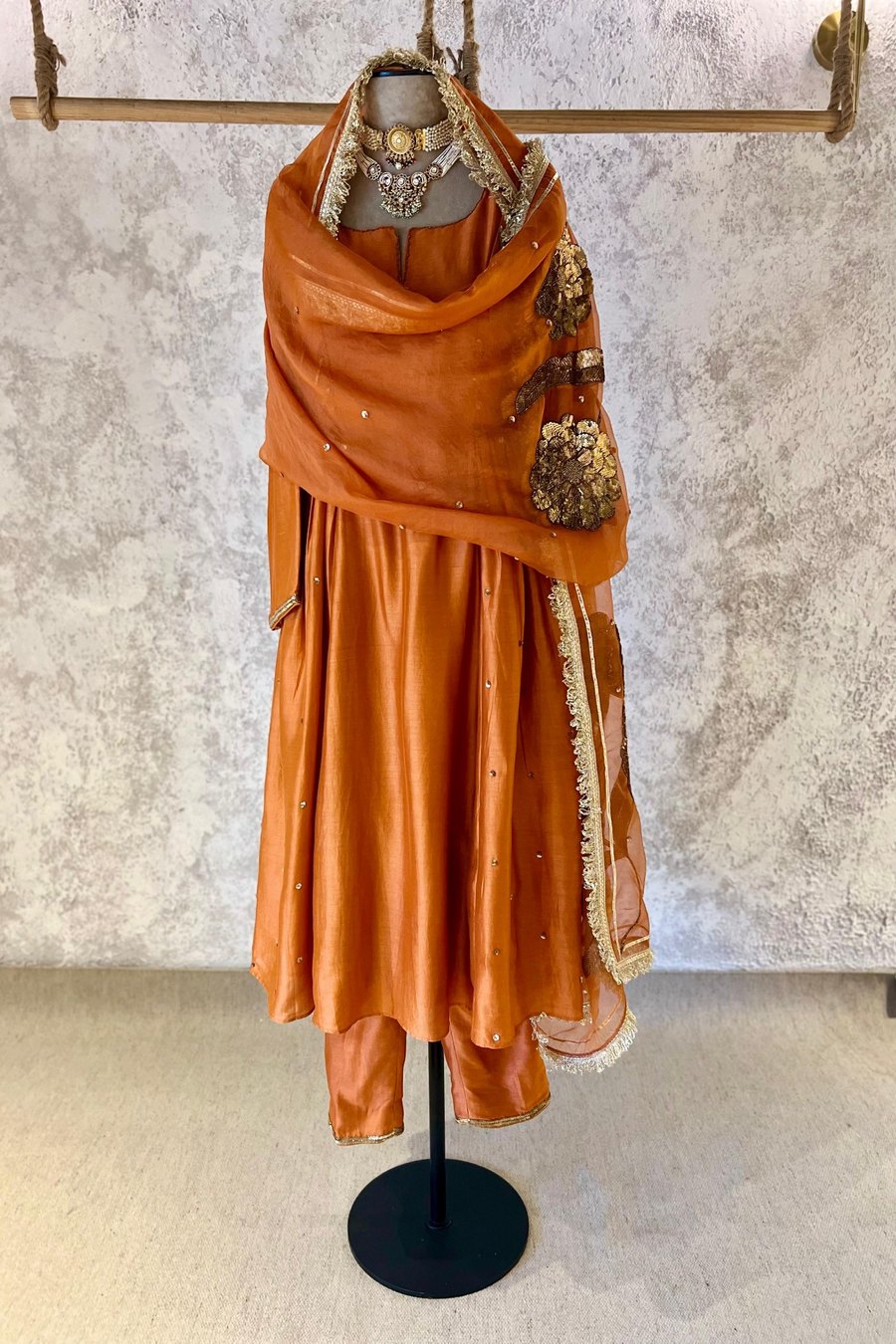
₹36,500
Blouse, dupatta and jewellery
One advantage of an anarkali over a saree is that the blouse question disappears. The bodice is part of the garment, cut from the same cloth and embroidered to match. There is no separate blouse to source, no colour to match in a different light, no third fitting. That is one decision fewer in a month that is already full of them.
For the dupatta, pin before she leaves the room, not at the venue. Two pins at the shoulders for the greeting line, one released for photographs, and a spare pin in the car. If the dupatta is heavy, take it as a single fall over one shoulder rather than a double drape; the double drape looks fuller but pulls at the neck after an hour.
Jewellery should follow the neckline, not the other way round. A high or heavily worked neckline wants earrings and a maang tikka rather than a necklace. A deep neckline can carry a necklace, but not one that sits on top of dense embroidery. If she is wearing the family set, bring it to the fitting. It is easier to adjust a neckline than to negotiate with an heirloom.
Shoes decide the hem. An anarkali should clear the floor by about an inch in the heels she will wear, and she should walk up and down stairs in them before the hem is finished. A hem that is right in flat shoes is a trip on a stage step.
The days between functions
A wedding-week anarkali does not need a full clean between every function. It needs air. Hang it overnight somewhere with a breeze, away from direct sun, and most of the smell and travel crease will leave on its own. Steam from a bathroom shower will drop the rest.
Blot a mark, do not rub it. A dry white cloth, working from the edge inwards, on the underarm, the neckline or the hem, which are the three places a mark starts. Do not use a wet wipe, and do not try a home remedy on organic-dyed cloth. If the mark is set, leave it for the dry cleaner at the end of the week rather than experimenting.
Carry two hook-and-eye sets and a needle with thread that matches the ground cloth, not the embroidery. A hook that gives way at nine in the evening is a five-minute repair or a ruined evening. And keep the plastic sleeve the outfit came in out of the cupboard; cloth needs to breathe, and a cotton bag does the job better.
Frequently asked
Can the mother of the bride wear an anarkali to the wedding?
Yes, and it is often the most practical choice. It is one finished garment with a fitted bodice and a skirt that opens when she sits, so there is nothing to re-pleat or re-tie during a long day. For a reception or a night function, a deeper colour in silk organza or tissue works well; for a daytime mehendi or haldi, chanderi is lighter and easier to move in.
What colour should the mother of the bride wear?
Start from the bride's palette and go one step deeper rather than matching it. If the bride is in red, deep green, purple or gold keeps the family group distinct. If the bride is in pastel, a stronger tone gives the photographs contrast. Deep colours also hold up better under flash at a night reception, where pale shades can lose their embroidery.
Is an anarkali comfortable for a full wedding day?
It is, if three things are right: the waist seam sits at her natural waist without pulling, the hem clears the floor by an inch in the heels she will wear, and the dupatta is pinned rather than balanced. If she will be hosting and standing for hours, choose the lighter skirt and keep the heavier work on the bodice. A fit check on WhatsApp or at either store settles it before the cloth is cut.
How is an anarkali different from a lehenga for the mother of the bride?
A lehenga is three pieces that have to be tied and arranged together. An anarkali is one piece that is already assembled, so it is faster to wear and stays in place through sitting, greeting and photographs. The lehenga gives more volume and more separation at the waist; the anarkali gives a cleaner line and less to manage.
Can you make the anarkali to her measurements?
Yes. Every piece here is hand embroidered and made to order, with custom sizing, so the bodice, shoulder, armhole and length are cut to her rather than adjusted afterwards. Message us on WhatsApp for a fit check or come to Shahpur Jat in Delhi or our Dehradun store. Shipping is free above ₹10,000 across India, and we ship internationally with code INTSHIP on orders above ₹89,000.
Explore more: wedding 2026 · designer hand embroidered blouse — or message us on WhatsApp for styling help.

The information below is required for social login
Sign In
Create New Account