

A sangeet is the one function where the outfit has to survive choreography. You will sit, stand, be pulled into a group number you barely rehearsed, and end the night in a hundred photographs taken under coloured light from every angle in the room. Organza beh
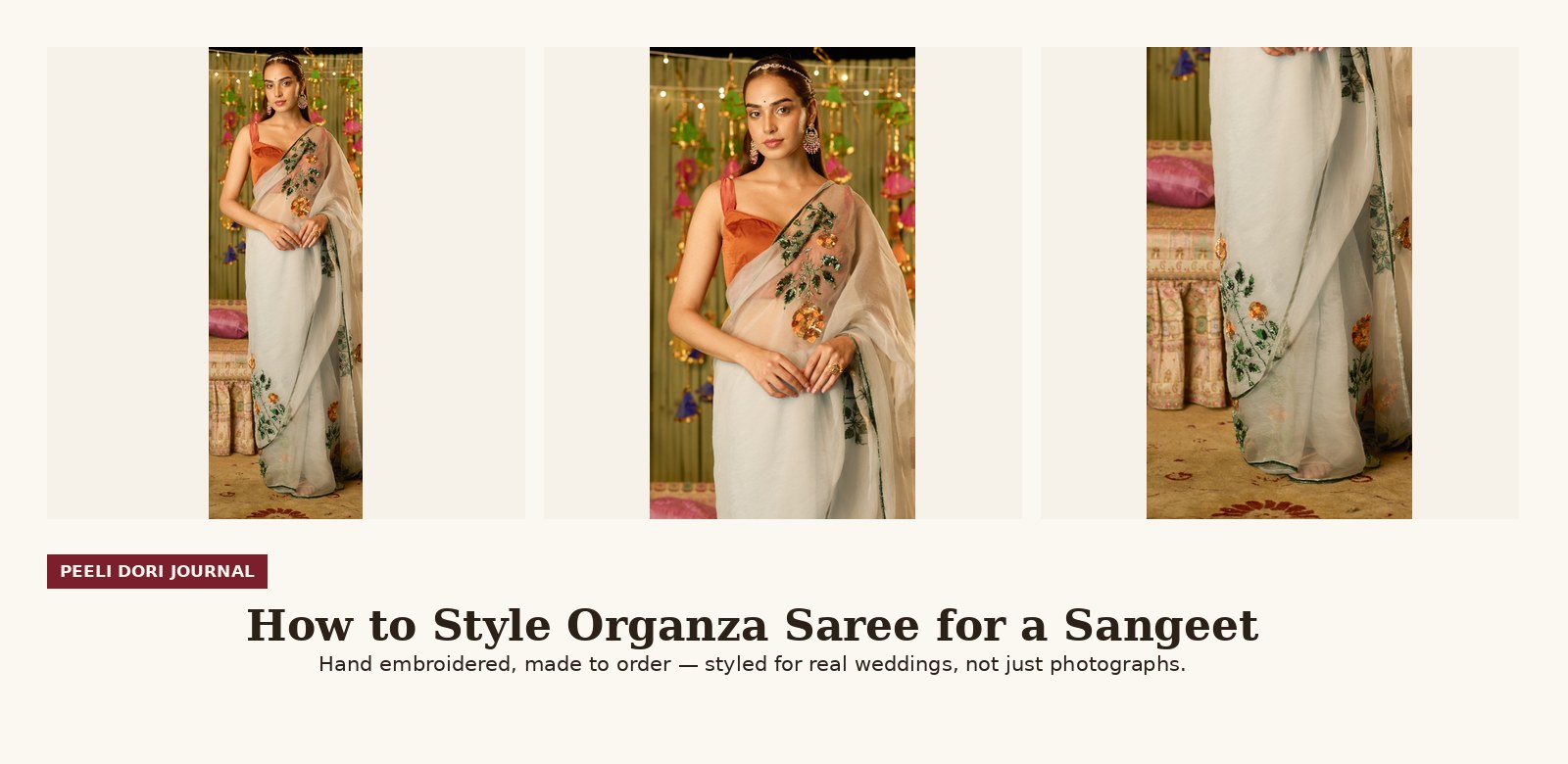
A sangeet is the one function where the outfit has to survive choreography. You will sit, stand, be pulled into a group number you barely rehearsed, and end the night in a hundred photographs taken under coloured light from every angle in the room. Organza behaves better than almost anything else in that situation. It is light, it holds a pleat where you pinned it, and it catches stage light instead of swallowing it. Here is how we would set one up, from the blouse down to the pins.
Why organza works at a sangeet
Most people commission their heaviest piece for the wedding day itself and then realise they still need something for the night before. The sangeet is usually three to four hours long, it starts with photographs while everyone is still fresh, moves through performances, and ends with a dance floor that nobody planned to be on. That is not a function for a seven-kilo lehenga. It is a function for sheer silk.
Weight is the first reason. You are standing, greeting, being called on stage and then dancing, all in the same outfit. A heavy drape pulls at the shoulder by the second hour and shows it in the pictures; an saree/silk-organza-saree.html" style="color:#8a6a3a;text-decoration:underline;">organza saree barely registers. The second reason is light. Sheer silk takes dye deeply, so a deep red or a gulabi pink glows under a warm spotlight rather than going flat, and the metallic thread in hand embroidery throws back exactly the glow the lighting designer was hoping for.
The third reason is the one an organza saree gets seldom credit for: it obeys. Organza has a crispness that behaves a little like good paper, so a pleat you set at six in the evening is still roughly where you left it at eleven. If your sangeet includes a choreographed number, or an entry where you will be pulled onto a stage, that is worth more than any amount of volume.
And there is the practical part after the wedding. We hand-embroider these on a sheer base and cut them to your measurements, so the blouse belongs to that saree and nothing else. Change the blouse and the same saree carries you through a reception, a Diwali dinner, or a friend's mehendi. A sangeet saree you can re-wear is a much better buy than a one-night outfit.
What to check on the fabric before you commit
Ask what the base is. Pure silk organza has a crispness that comes back at you when you handle it, and it carries hand embroidery without sagging. Lighter synthetic organza is cheaper and shinier, and it will not hold the same weight of work. If someone cannot tell you what the ground is, that is the answer.
Then look at the embroidery, because different techniques behave differently on a sheer base. Gota patti is flat metallic ribbon work and sits beautifully on organza, since it adds almost no weight. Zardozi is denser and wants a slightly stronger ground. Dabka is finer and lighter still. The rule we work to is simple: the springier the fabric, the lighter the work should be, so that the embroidery moves with you instead of dragging the drape down.
Because the ground is sheer, the embroidery is visible from both sides. Turn the piece over. The reverse of a well-made hand-embroidered saree is finished nearly as carefully as the front, and if the back looks like a mess of loose thread, you will see it every time the pallu moves during a performance.
Finally, hold it against yourself and take a few steps. Sheer silk sits slightly away from the body instead of clinging, which is the quality that makes it photograph so well and also the reason it asks more of you: the blouse and the petticoat are on show, so both are decisions, not afterthoughts. And check the fall of the pallu at your own height, in the heel you intend to wear. Everything we make is to order, so this is the point to settle it.
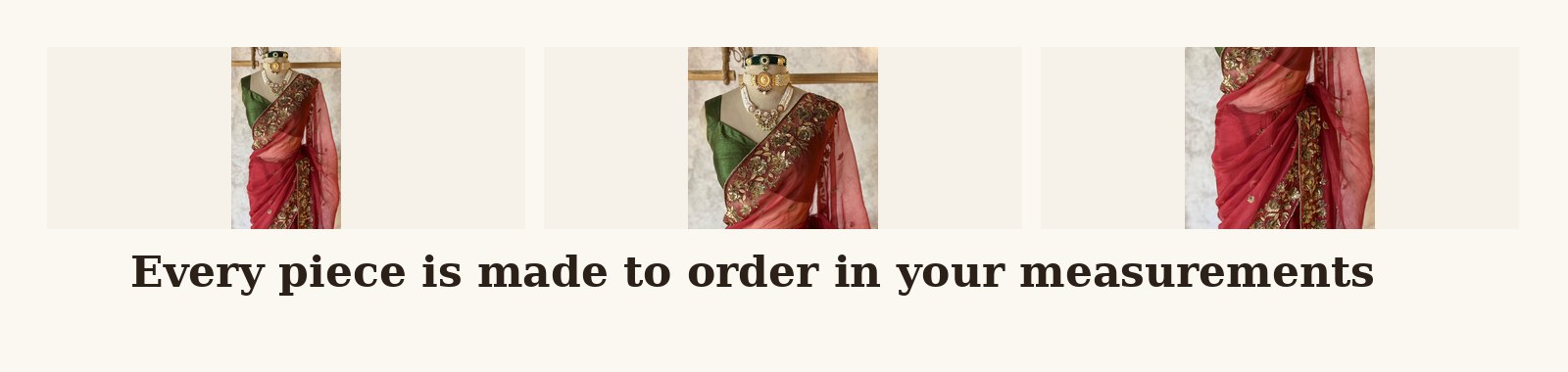
Dress for the job you will actually be doing
A sangeet has three or four different jobs in the same room, and the best outfit depends on which one is yours. If you are dancing, especially in a group performance, you want the drape locked down: fuller pleats, pinned at the waist and at the shoulder, and a hem that stops just short of the floor so that nobody catches it with a heel. Pin the pallu across the arm rather than leaving it loose over the shoulder. It looks deliberate on stage and it stops the fabric from flying during a turn.
If you are hosting, or you are the mother of the bride, you will be standing far longer than you dance, greeting guests and being called on and off stage all evening. Comfort is the whole brief. Take a slightly softer drape, a blouse with a little more coverage, and let your jewellery do the talking instead of the volume of the saree.
On silhouette, organza is unusually forgiving in one particular way: it does not add bulk at the hip, it shows the waist, and it makes height look intentional. What it will not do is disappear. If you want the presence of a lehenga without committing to a stitched skirt, drape the organza with fuller pleats, add a belt at the waist, and pin the pallu across — you get the volume and the drama, and on Monday it goes back to being a saree.
Settle the fit early. Send your measurements and the height of the heel you will wear, and ask for a fit check before the final stitching. Two weeks before a wedding is not the time to be fixing a shoulder. We do this over WhatsApp for anyone buying from another city, and it is the single thing that most improves how the photos come out.
Colour is worth a last word, but as a finishing decision rather than the first one. Deep red, gulabi pink and maroon all hold their depth under warm light and read rich in a group photograph. Ivory is a quieter choice that suits a host more than a performer, because it reflects light rather than answering it.
The organza sarees we would put on a sangeet stage
These are the six we would bring out first for a sangeet. All hand-embroidered on organza or silk satin, all made to order and cut to your measurements, priced between ₹44,500 and ₹59,500. A red or gulabi piece carries the performance; maroon and ivory carry the hosting. The blouse and the petticoat are worth a conversation before you commit to any of them.
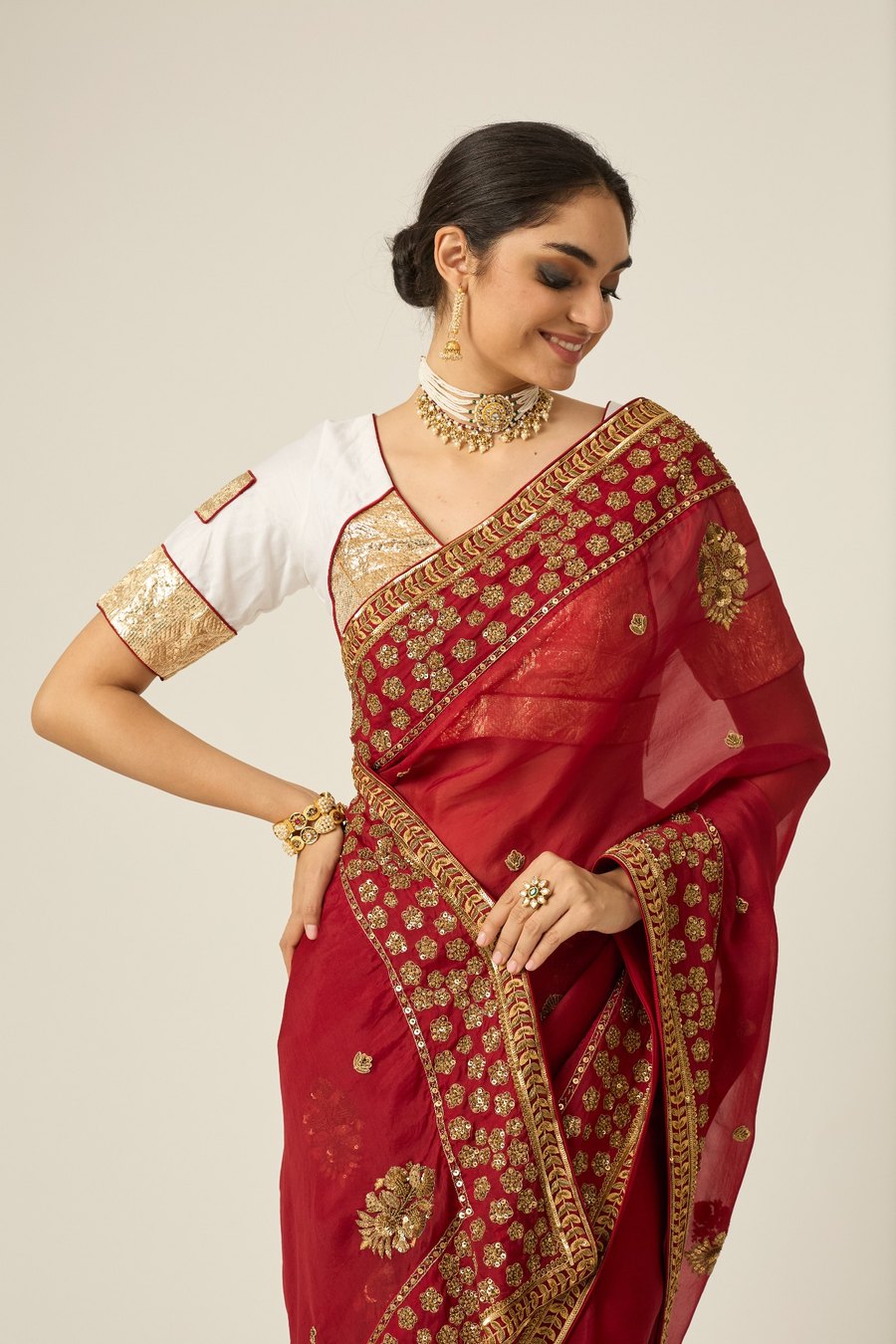
₹59,500
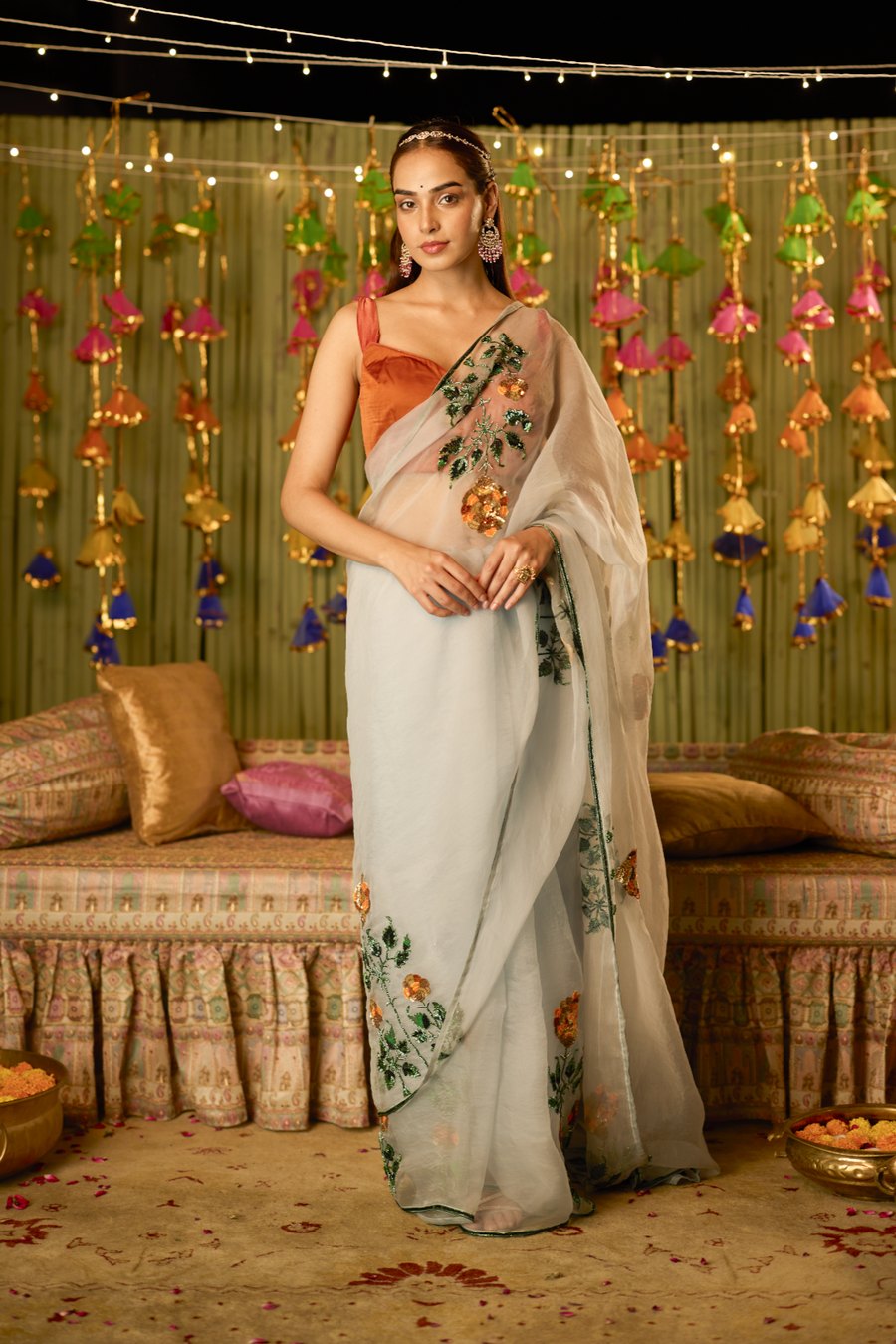
₹48,500
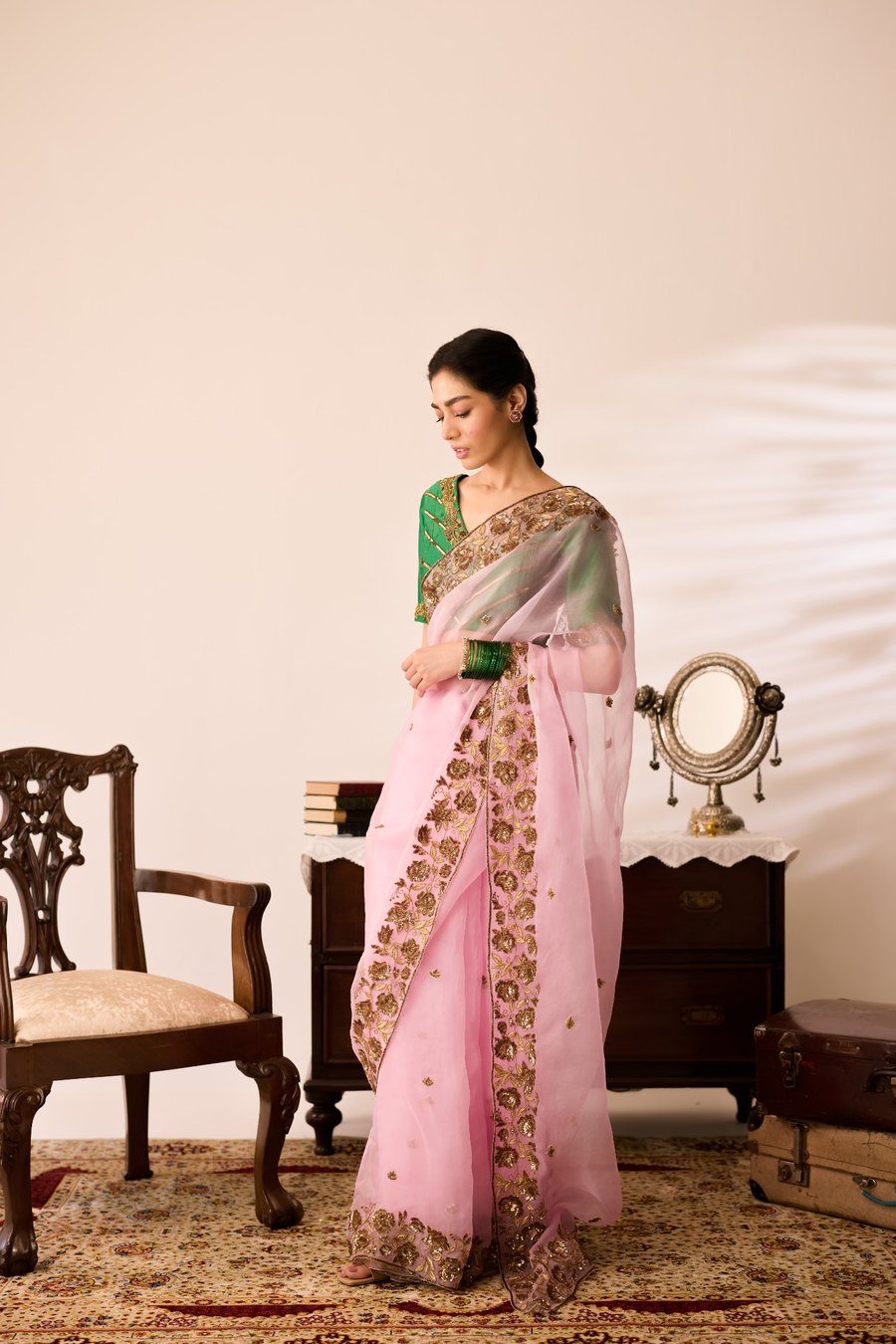
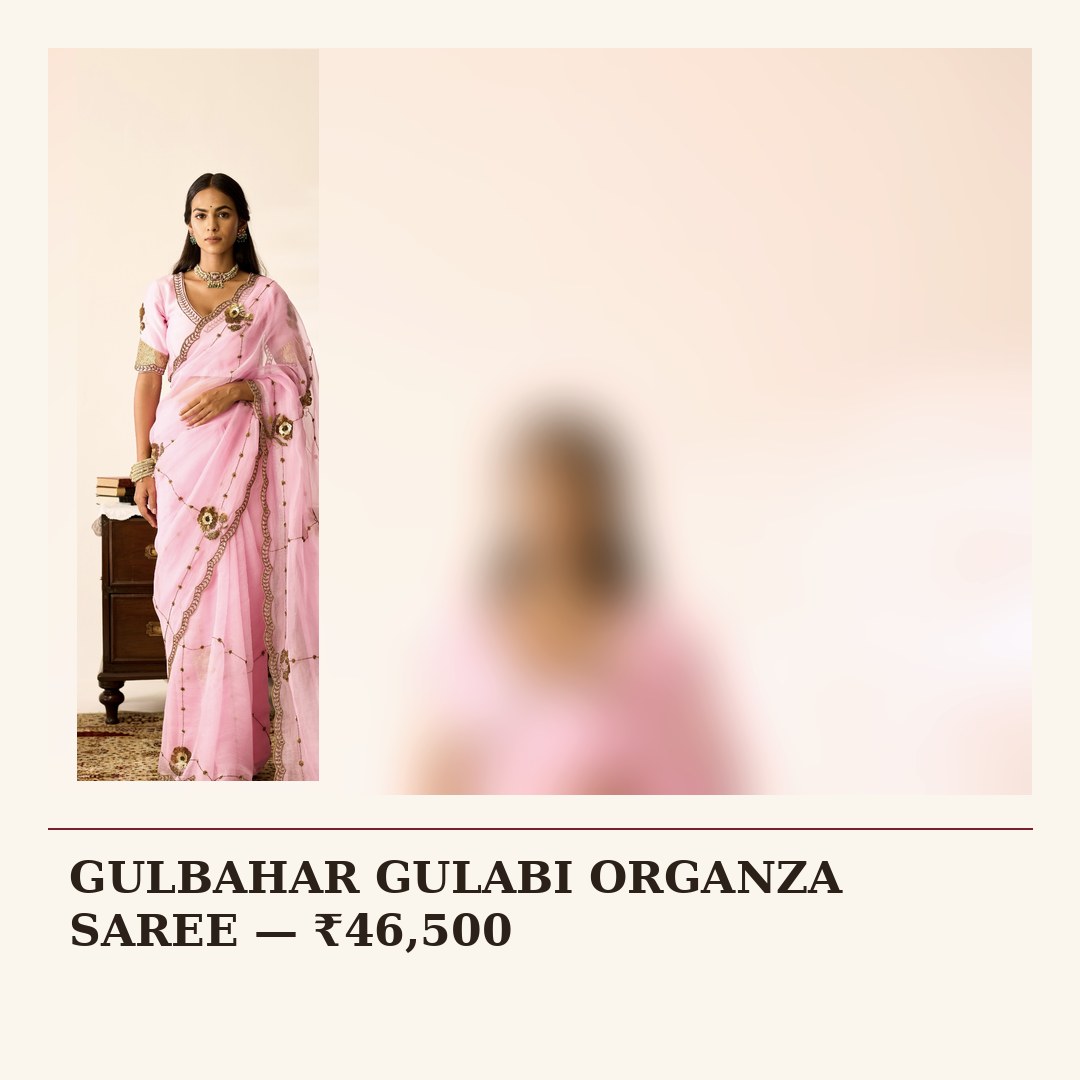
₹46,500
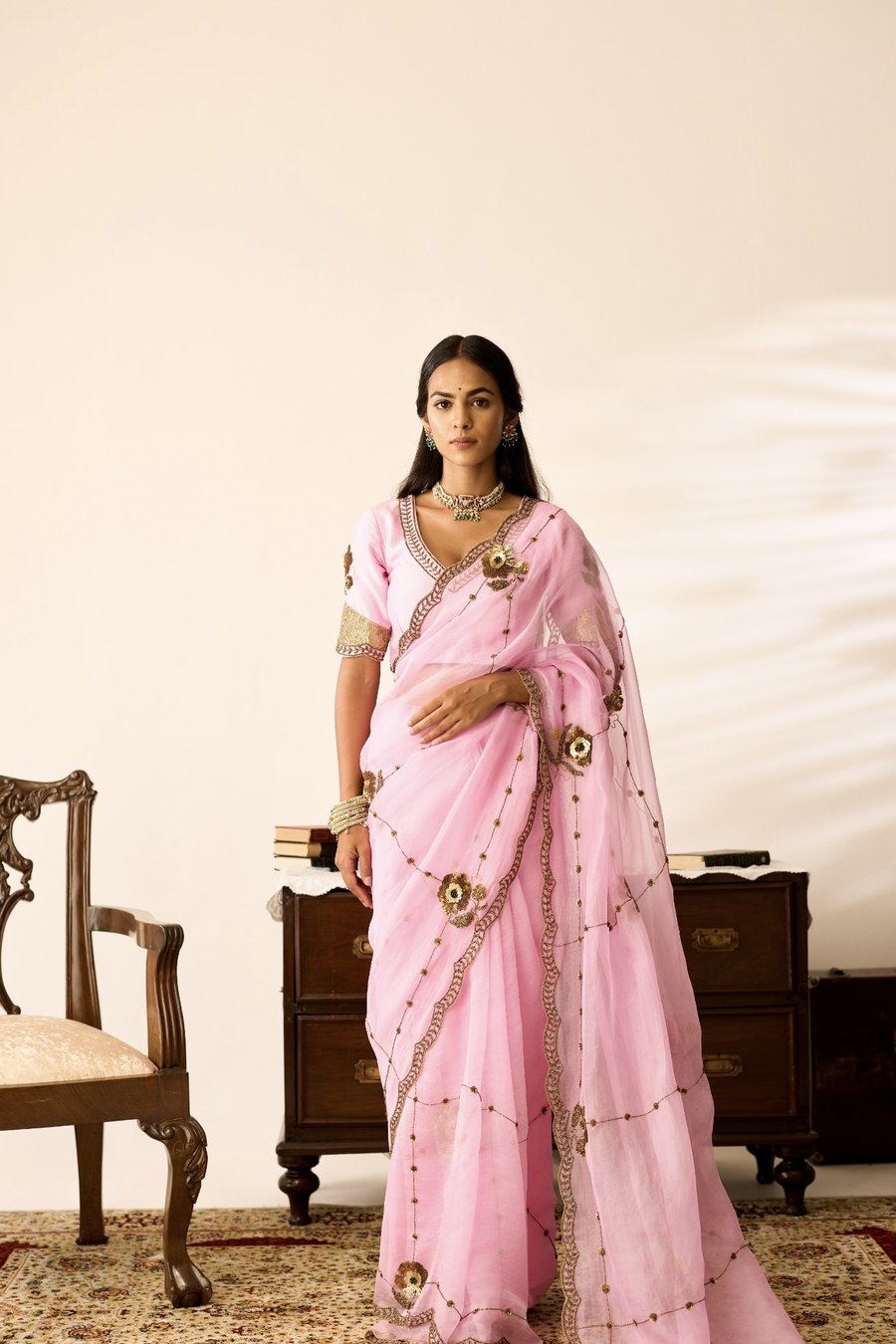
₹46,500
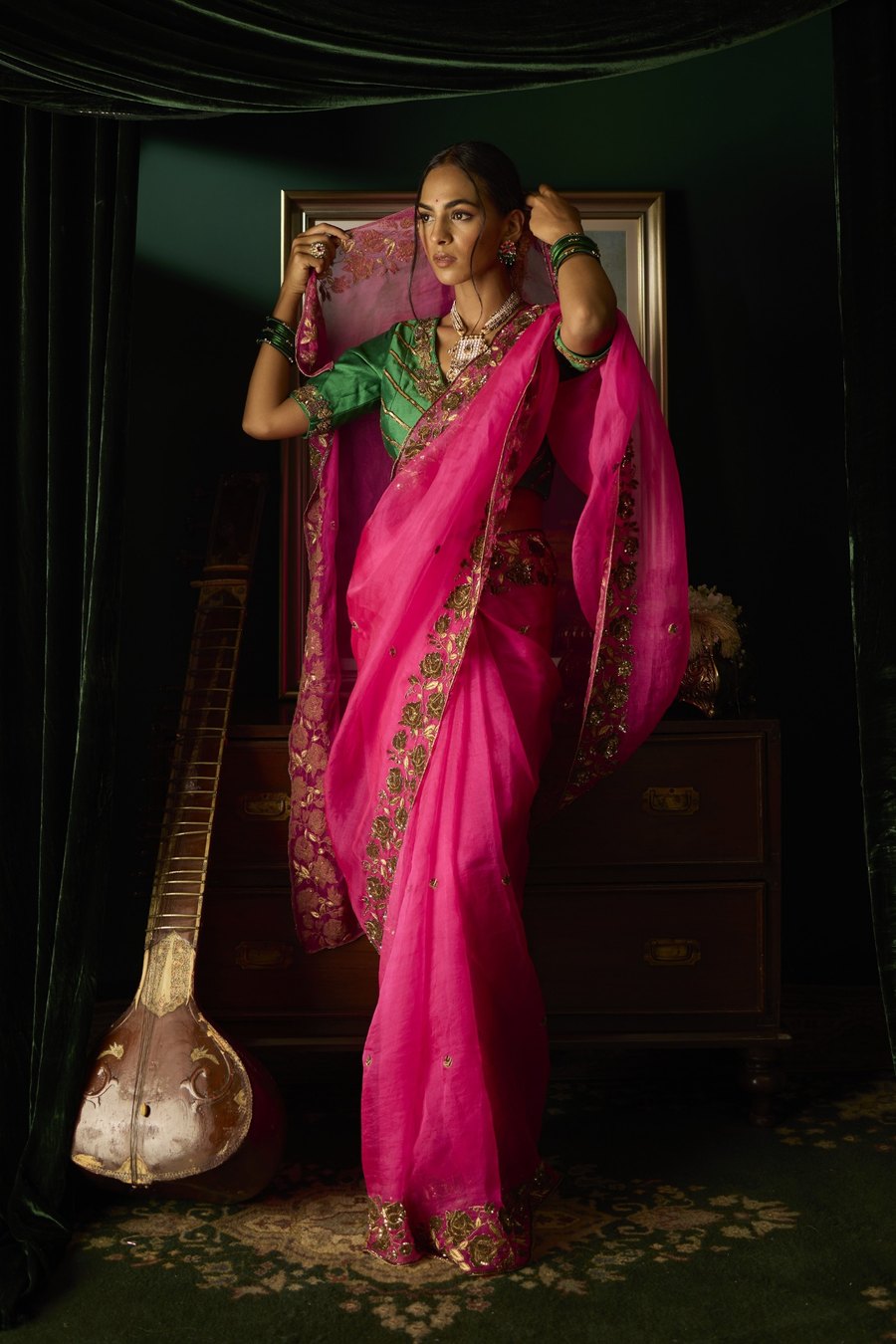
₹46,500
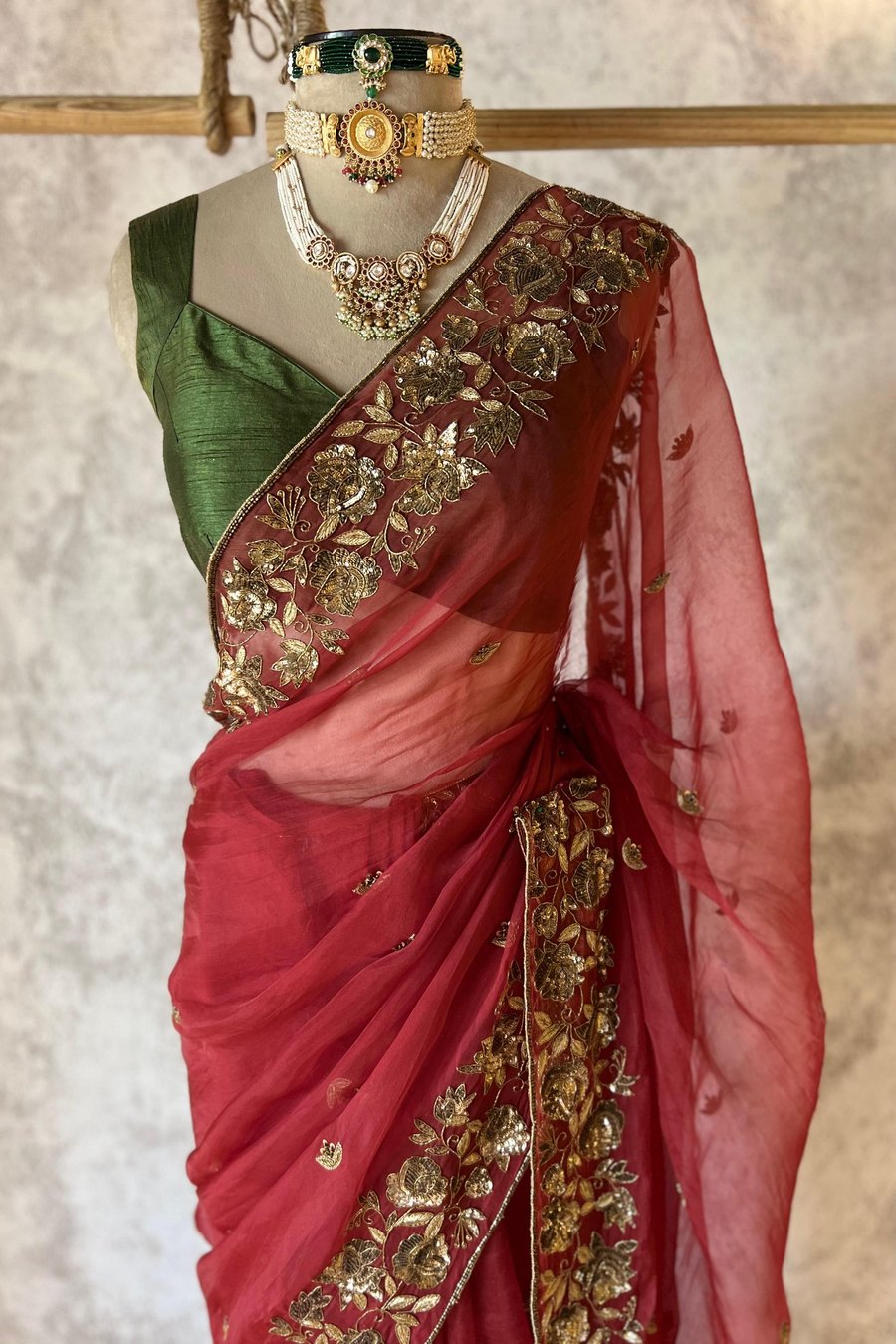
₹46,500
The blouse, the drape, and the details that last the night
With a sheer saree the blouse is doing more work than the saree is. It is the only fitted piece in the outfit, and because the ground is sheer it shows through the pleats, so it reads as part of the design rather than something hidden underneath. A corset line, a waistcoat element or a structured sleeve gives an organza drape the architecture it does not have on its own, and a slightly heavier blouse fabric holds its shape when the saree does not.
If you are dancing, go sleeveless or cap-sleeve and keep the blouse fitted properly rather than tight. A blouse that digs in at the armhole will be the first thing you notice at hour two. Match the petticoat to you, not to the fabric: under a sheer ground a white petticoat beneath a deep saree reads grey in daylight, and a very dark one can dull the colour of the saree itself. Bring the saree and the blouse to the fitting and look at all three together.
Then pin properly. This is the whole trick with organza at a sangeet. Pin the pleats at the waist, add a second pin at the shoulder where the pallu takes the weight, and keep a belt if you like shape, because it holds the pleats in place as much as it flatters. Carry three spare pins in the clutch. Everyone who has ever been called on stage unexpectedly has needed them.
On jewellery, balance weight against the ground. Organza is light, so a very heavy jhumka with a long chain will keep pulling the pallu off your shoulder through the evening. One statement piece plus lighter earrings tends to photograph better than everything at once, and the embroidery is already doing the metalwork. If you plan to keep the pallu over the shoulder, a low bun keeps the line clean and stops your hair from sitting on the work.
Before the function, and the morning after
For travel, roll a silk organza around a soft core rather than folding it flat. It creases at a hard fold and takes a press better than it takes a crease. Keep stored pieces out of direct sunlight, since deep organic dyes hold their depth far longer that way, and keep them away from anything that can snag the embroidery.
Do not wash an embroidered organza at home. A watermark left behind by the embroidery is much harder to correct than the cost of a cleaner who knows hand work, and you should tell them exactly what the work is before you hand it over. If a pleat has been sitting in a wardrobe for weeks, a light press through a cloth brings the crispness back quickly.
The morning after a sangeet, air the saree rather than folding it straight away, especially if it was a warm evening and you were on a dance floor. Let it breathe, check the pins for any pulled thread, and put it away rolled. Then leave it alone until the next function. If the blouse needs adjusting after a night of dancing, that is normal, and it is a much smaller job than it sounds.
Frequently asked
Can I actually dance in an organza saree?
Yes, and it is one of the easier sarees to dance in precisely because it is light. Pin the pleats at the waist and once more at the shoulder, keep the pallu across the arm rather than over it, and take a hem that sits just off the floor so no one catches it with a heel.
What blouse should I wear with an organza saree for a sangeet?
Something with structure. Because the base is sheer, the blouse shows through the pleats, so a corset line, a waistcoat element or a defined sleeve gives the drape its shape. Keep it fitted rather than tight, and go sleeveless or cap-sleeve if you will be on a stage.
Which colour organza saree works best for a sangeet?
Deep red, gulabi pink and maroon hold their depth best under warm stage light and read richly in group photographs. Ivory suits a host more than a performer. The fabric and the embroidery matter more than the shade, though, so pick the piece you want to keep wearing and let the colour follow.
Is organza too plain for an evening function?
Not when it carries hand embroidery. Gota patti, zardozi and dabka all catch light, and on a sheer base the work is visible from both sides, so it reads from across a room. That is also why we check the reverse of every piece before it leaves the studio.
How much does a hand-embroidered organza saree cost, and how long does it take?
The six above run from ₹44,500 to ₹59,500. Everything we sell is made to order, hand-embroidered and cut to your measurements, and custom sizing is part of that. Shipping is free across India above ₹10,000, international orders ship with the code INTSHIP above ₹49,000, and you can message us on WhatsApp for a fit check or styling help before you decide.
Explore more: saree · tissue silk sarees — or message us on WhatsApp for styling help.

The information below is required for social login
Sign In
Create New Account